Key takeaways
Selling your own house in Uruguay is five steps: prepare the property digitally, set the price, publish one consistent record, let the inquiries reach an assigned agent, then negotiate and sign before the escribano.
The legal spine does not change when you sell without an agency. The escribano, the title study, the anti-money-laundering due diligence and the taxes are the same either way.
What changes is the coordination and the presentation. Both can now be arranged directly, and neither requires you to field calls from strangers.
Contents
Five steps, in order
There is no mystery to selling a house in Uruguay without an agency. There is a sequence, and the sequence is the same whether an agent runs it or you do. What changes is who arranges each part.
The five steps are: prepare the property so it can be evaluated properly, set a price you can defend, publish one consistent record of it, let the inquiries reach a professional instead of your phone, and then negotiate and sign.
Two of those steps are the ones owners worry about, and they are the two that have not changed at all: the price and the signing. The other three used to require an agency's supplier network and now can be commissioned directly.
What follows is the practical version. It is written to be useful whether or not you end up using any particular platform, because most of it is about the Uruguayan process rather than about a product.
Step 1: Prepare the property digitally
Before anything is published, the property has to be able to answer questions without you in the room.
This is the step most owners get wrong, and it is not about tidying. It is about producing a record complete enough that a buyer can form an opinion before they call. In practice that means an interactive 3D tour walked room by room, a fly-through video, floor plans with the sun path, and professional photographs, all captured in one session.
On domizello that package is produced by domizello's own team in a single camera visit, and an owner selling a property pays no listing fee: what is paid for is the production, priced to cover its cost, with no monthly subscription and no cap on the number of listings.
The session is one morning. The home needs to be ready when the team arrives and empty of people and pets during the shoot. The crew photographs the property; it does not tidy, stage or move furniture, so the house has to be prepared beforehand. An adult opens at the agreed time and can leave during the session as long as they are reachable by phone.
Why this step comes first and not last: everything downstream depends on it. The price you set is only credible if a buyer can see what they are paying for. The inquiries you receive are only worth answering if the person asking has already looked. And the visits you get are only productive if the questions a screen could answer were answered by the screen.
What each piece of that package actually answers for a buyer is worth reading before you commission anything, because the point is not to own a tour. The point is to stop being the person who answers the same six questions forty times.
Step 2: Set the price
This is the hardest step in Uruguay, and it is hard for a structural reason rather than a personal one.
Final sale prices are not publicly searchable here. There is no shared listing database that records what a comparable house actually sold for. What is visible is asking prices, and an asking price is a statement of intention, not a transaction.
So you have three routes, and they are not mutually exclusive.
A professional valuation. An independent appraiser, or a broker who works your zone, will build a figure from comparables they have seen go through. This costs money and it is often worth it, particularly if the property is unusual or if you have no recent reference points.
Comparable asking prices. Look at what similar properties in the same area are asking, and discount for the gap between asking and closing, which in this market is not small. Domizello keeps a market index of asking prices that is refreshed regularly. It is not a valuation and it is not a tool you open yourself; it exists so the platform's own picture of the market stays current.
Your own reference points. What you paid, what you spent, what the neighbors say. Use these with care. What you paid is history, not evidence, and what you spent on renovations is almost never recovered in full.
Whichever route you take, write down the reasoning, not just the number. You will need it in step 5, when somebody offers you less and you have to decide whether they are negotiating or simply uninformed. How to price a home when sale prices stay private goes through the whole problem.
One warning that applies to every owner: a price set too high does not merely fail. It ages the listing. A property that has been published for six months at the wrong number carries that history into every conversation, and buyers read a long listing period as a signal that something is wrong with the house.
Step 3: Publish one consistent record
Once the material exists and the price is set, the property needs one place where it is described completely and correctly.
This matters more in Uruguay than in most markets. Because there is no shared listing database, the same house can appear in several places at different prices with different photographs and different square meters. Buyers do not experience that as variety. They experience it as a reason not to trust any of the versions.
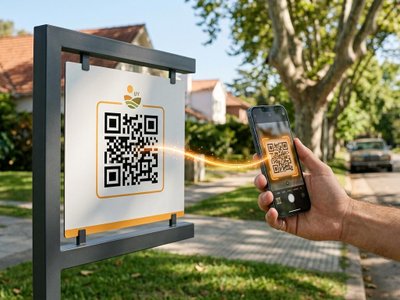
Each property appears once on domizello. That does not mean you have to stop advertising elsewhere, and nothing here asks for exclusivity. An owner can keep the property on their own channels and on other portals at the same time, using the photographs, the video and the 2D floor plan in those listings, with the mini-site link or a QR code pointing back to the full presentation.
What it does mean is that the versions should agree. Same price, same square meters, same photographs, same description of what is included. If your house says three different things in three different places, the confusion lands on you as the seller, in the form of lower offers and longer verification.
Every listing on domizello gets a shareable mini-site, one address carrying the photographs, the video, the plans and the tour, which you can send on WhatsApp or print as a QR code. The 3D tour and the 3D floor plan stay on domizello and are viewed there rather than handed over as files or embedded on another site; once the property is sold, both close. The photographs, the video and the 2D floor plan stay yours to use.
Keeping the record current is your obligation. Price changes and status changes are reported within 72 hours, because a listing that says available when the house is under offer wastes everybody's week.
Step 4: Let the inquiries reach an agent
This is the step owners most often get wrong, and the mistake is simple: they publish their own phone number.
The moment you do that, you become the first line of contact for everyone. Some of them are genuine buyers. Some are agents working for a buyer. Some are collecting information for a competitor. Some are curious. You have no way of telling which is which, and your number is the price of finding out.
The alternative is a route where the inquiry is handled before it reaches you. On a domizello listing, a buyer presses Contact Agent and the form asks one question: are they looking for themselves, or are they an agent acting for a client? domizello's team then assigns the inquiry by hand to an agent, and that agent sees the answer before accepting. The conversation runs through the platform, so your contact details are never handed over, not even once the buyer is qualified.
What arrives on your side is therefore not a stranger testing whether the price will move. It is an agent with a buyer who has already walked the property in the tour and wants to see the two things a screen cannot show: how it smells and how it sounds.
Note what this step does not do. It does not remove the visit. The first visit being digital does not remove the second one, and any guide that promises otherwise is selling something. What it removes is the fifteen visits that were only ever going to answer questions the listing could have answered.
Step 5: Negotiate, promise and sign
The last step is the one that has not changed at all, and it is the one where the legal requirements live.
The sequence in Uruguay runs through four documents.
Boleto de reserva. A reservation ticket. The buyer commits a sum to take the property off the market while the paperwork is prepared. It is short, it is binding in the sense that the money is at stake, and it buys both sides time.
Promesa de compraventa. The promise of sale, governed by Ley 8.733. This is the substantive document and it should carry, at minimum: identification of the parties, a description of the property, the price, the payment schedule and due dates, the deposit or advance, a penalty clause, and the seller's declaration that the property carries no liens or encumbrances. If you sign one of these without professional advice, you are the one taking the risk.
The escribano. A notary, not a lawyer. The escribano studies the title, the liens and the debts, and personally carries out the client due diligence that Uruguayan anti-money-laundering rules (Ley 19.574) require. They do not inspect the condition of the property and they are not there to negotiate on your behalf.
Escrituración. The deed, signed before the escribano. You sign in person, or through a power of attorney if you are abroad, which is a document that has to be prepared in advance and, if granted overseas, legalized.
Throughout this step you are the decision-maker. The price you accept, the schedule you agree, the penalty clause you tolerate: all yours. That is the part of selling without an agency that is genuinely unchanged, and it is also the part where having somebody experienced in the room earns their fee.
What the sale costs you in taxes
These figures do not change depending on who publishes the property, so they belong in any honest step-by-step guide.
ITP. The property transfer tax is 2% of the cadastral valor real, paid by the seller, and a further 2% paid by the buyer. The base is the cadastral value, not the price you agreed, which is why the two numbers can differ substantially.
IRPF or IRNR. Twelve percent on the gain, for residents under IRPF and for non-residents under IRNR. The gain is the difference between what you receive and what you paid, adjusted, and there are exemptions that apply in specific situations, including the sale of a primary residence under certain conditions.
Retention at the deed. Where IRNR applies, the escribano withholds the tax at the moment of signing rather than leaving it to the seller to settle afterwards.
Two cautions. First, these are the standard rates and your situation may not be standard: exemptions, holding periods and residency status all change the outcome, and the escribano is the person who tells you which applies to you. Second, the cadastral value is a figure the Dirección Nacional de Catastro sets, and it is not an estimate of what your house is worth. Never use it to price the property in step 2.
How long it takes
Nobody can promise you a timeline, and any guide that gives you one in weeks is guessing. What can be said honestly is where the time goes.
Production is a single session, usually a morning, plus the time to publish and review the listing afterwards. Finding a buyer is the part with no predictable duration, and it depends on the price, the property and the season far more than on the platform. The legal sequence once a buyer appears runs through the reservation, the promise, the title study and the deed, and the title study is the part that takes as long as it takes.
One seasonal factor is worth knowing if the property is on the coast or is currently occupied. The weeks when buyer demand peaks are the weeks when showing an occupied home is most awkward. A listing that works without a door being opened keeps selling while the house is full, which is the practical answer to a timing problem you cannot control.
You can present your home on domizello with or without an agency. Here is what publishing it yourself involves.
Sources
GlobalTax: "Promesa de compraventa en Uruguay: cláusulas clave para extranjeros" (15 November 2026) – the four-step sequence (boleto de reserva, promesa de compraventa, escribano, escrituración), the minimum clauses of a promise of sale, and the ITP and IRPF/IRNR rates. Cites Ley 8.733.
GlobalTax: "Vender un inmueble en Uruguay siendo no residente: IRNR y retención" (15 November 2026) – IRNR at 12% on the gain for non-residents and the retention carried out at the deed.
domizello Help Center: "How do I help the owner prepare for the shoot?" – the shoot is one session; the crew photographs and does not tidy, stage or move furniture; an adult opens at the agreed time and may leave during the shoot if reachable by phone.
domizello Help Center: "Why can't I contact the owner directly?" – every inquiry is handled by a vetted broker who carries professional liability: the listing's featuring broker or, when the owner listed the property directly, a broker that domizello assigns.
domizello Help Center: "Can I keep the property on my own website and other portals?" – domizello does not ask for exclusivity, so the property can stay on your own website and on other portals.
domizello Help Center: "What is in the Share tab?" – the 3D tour travels as a link or a button and never as a file; the photos and videos carry domizello's mark.
Frequently Asked Questions
Is it legal to sell a house in Uruguay without a real estate agent?
Yes. No rule requires an agency to sell your own property. The legal requirements are the same either way: an escribano studies the title, the liens and the debts and personally carries out the client due diligence required by Ley 19.574, the transaction runs through a reservation ticket, a promise of sale under Ley 8.733 and a deed, and the taxes apply regardless of who published the listing.
What taxes do I pay when I sell my house in Uruguay?
ITP at 2% of the cadastral valor real, paid by the seller, with a further 2% paid by the buyer. On top of that, IRPF for residents or IRNR for non-residents at 12% on the gain, which is the difference between what you receive and what you paid, adjusted. Exemptions apply in specific situations, and the escribano is the person who tells you which applies to you. Where IRNR applies, the tax is withheld at the deed.
How do I set a price when sale prices are not public in Uruguay?
From comparable asking prices, discounted for the gap between asking and closing, and ideally checked against a professional valuation or a broker who works your zone. Final sale prices are not publicly searchable and there is no shared listing database, so an asking price is a statement of intention rather than a transaction. Write down your reasoning, not just the number, because you will need it when somebody offers less.
Do I have to give out my phone number to sell my own property?
No. On a domizello listing the buyer presses Contact Agent and the conversation runs through the platform, so your number is never handed over. The form asks whether the person is looking for themselves or is an agent acting for a client, and domizello's team assigns the inquiry by hand to an agent who sees that answer before accepting. Your contact details never reach the buyer, not even once they are qualified.
Can I sell on domizello and still advertise on other portals?
Yes. Domizello does not ask for exclusivity. You can use the photographs, the video and the 2D floor plan in your other listings, with the mini-site link or a QR code pointing to the full presentation. The 3D tour and the 3D floor plan stay on domizello and are never embedded on another site. What matters is that every version of your property agrees on price, square meters and description.
How long does it take to sell a house in Uruguay?
Nobody can promise a timeline honestly. Production of the material is a single session, usually a morning. Finding a buyer has no predictable duration and depends on the price, the property and the season. Once a buyer appears, the legal sequence runs through the reservation, the promise of sale, the title study and the deed, and the title study takes as long as it takes.
What documents do I need to sell my house?
Identification of the parties, a description of the property, the title, and the records the escribano needs to study liens and debts. The promise of sale should carry the price, the payment schedule and due dates, the deposit or advance, a penalty clause and your declaration that the property carries no encumbrances. If you are abroad you also need a power of attorney, prepared in advance and legalized where it was granted.