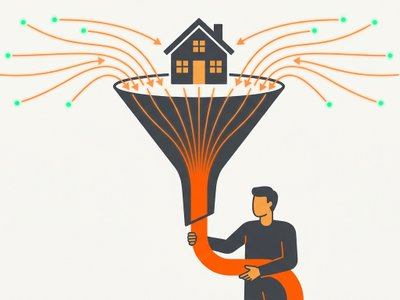
Key takeaways
The cost of selling a house in Uruguay is not one number. It is five lines: the listing, the marketing package, the legal and notarial process, the taxes, and the buyer's agent. They behave differently, and only some of them change depending on how you sell.
Two of the five lines are fixed. The legal process and the taxes apply the same whether you sell with an agency, without one, or through a platform. Nobody's route makes the escribano or the tax authority cheaper.
The useful move is not to find the cheapest line. It is to see every line before you decide, so you are comparing complete pictures rather than discovering costs mid-process.
Contents
Why the question has no single answer
"How much does it cost to sell my house in Uruguay?" is the question every owner asks, and it is the one that almost never gets a straight answer, because the straight answer does not exist.
Not because the costs are secret. They are not. The reason is that the cost of selling is not one thing. It is five different lines that behave in five different ways: one you pay to be seen, one you pay for the material, two that apply no matter what you do, and one that appears only when a particular kind of buyer shows up.
Most owners discover these lines one at a time, mid-process, which is the worst possible moment to learn what something costs. The point of this breakdown is to put all five on the table at once, so you can look at the whole picture before you choose a path, rather than assembling it from surprises.
One rule governs everything below: where a number exists and is public, it is given with its source. Where a number depends on your property, your price or your situation, it is described instead, because a fake average would be less honest than no number at all.
The five lines that make up the cost
Here is the whole structure, before the detail.
Line 1, the listing. What you pay to have the property appear where buyers look. On the portals this is a fee for the placement, and it ends when the listing period ends.
Line 2, the marketing package. What you pay for the material that describes the property: the walkthrough, the video, the floor plans, the photographs. On most platforms these are separate costs you arrange yourself; on domizello they are produced as one package by domizello's own team.
Line 3, the legal and notarial process. The escribano, the title study, the documents. This line is fixed by the process itself and is identical whichever path you take.
Line 4, the taxes. ITP and the income tax on the gain. Also fixed by law, identical whichever path you take, and the only line where the numbers are public and dated.
Line 5, the buyer's agent. What is paid when a buyer arrives with their own agent. This line does not always appear, and when it does, it is paid for the buyer's side of the transaction.
Two of those five, lines 3 and 4, do not care how you sell. The other three are where the paths genuinely differ. That asymmetry is the whole story.
Line 1: The listing
The portals charge to publish. That is the honest description of the product: you pay a listing fee and you get a placement in the filtered search results for a set period, usually carrying a description, photographs, the price and a contact route. Most portals sell a higher position within those results separately, for a further fee.
Two things are worth being clear about. First, the amount varies by portal, by property type and by how long you want the placement, and no honest general figure can be given here without naming a platform and a date, which would age immediately. Second, and more important, the placement ends when the period ends. You do not keep the position, because the position was never yours.
On domizello an owner selling a property pays no listing fee. What is paid for is the marketing package, described in the next line. There is no monthly subscription and no cap on the number of listings an owner can have.
What this line buys, on any platform, is visibility inside somebody else's search results. What it does not buy is the material itself: if the photographs are weak, the listing is weak, and the fee does not change that.
Line 2: The marketing package
This is the line owners most often do not see coming, because it is the one that is easiest to skip and the one that decides whether the other lines work.
The package is the set of material that lets a property answer questions without a human in the loop: an interactive 3D tour, a fly-through video, a 3D floor plan with a sun-path simulation, and professional photographs. On most platforms these are not included in anything; you commission them separately, from separate suppliers, at separate prices, and you coordinate the whole thing yourself.
On domizello the package is produced by domizello's own team in a single camera visit, and it is priced to cover its cost. That is the whole of what can be said about the number honestly: it is a production cost, not a subscription, and it is paid once. The session is one morning; the home needs to be ready when the team arrives and empty of people and pets during the shoot; the crew photographs and does not tidy, stage or move furniture.
What you end up with is a complete presentation plus the material to advertise elsewhere. Every listing gets a shareable mini-site, one address carrying the photographs, the video, the plans and the tour, which you can send on WhatsApp or print as a QR code. The photographs, the video and the 2D floor plan can be downloaded and used on your own channels; the 3D tour and the 3D floor plan stay on domizello and are viewed there rather than handed over as files or embedded on another site, and both close once the property is sold.
What each piece of that package actually answers for a buyer is the question that decides whether this line is worth what it costs, and it is a question no portal fee answers.
Line 3: The legal and notarial process
This line is the one that surprises owners who assume that selling without an agency means less paperwork. It does not. The legal sequence is identical whichever path you take, because it is set by the process, not by who publishes the listing.
The sequence runs through four documents: a reservation ticket, a promise of sale governed by Ley 8.733, a notarial title study, and a deed signed before an escribano. The promise of sale should carry identification of the parties, a description of the property, the price, the payment schedule and due dates, the deposit or advance, a penalty clause and the seller's declaration that the property carries no liens or encumbrances.
The escribano is a notary, not a lawyer. They study the title, the liens and the debts, and personally carry out the client due diligence that Uruguayan anti-money-laundering rules (Ley 19.574) require. They do not inspect the condition of the property and they are not there to negotiate on your behalf.
About the cost of this line: the escribano's fees exist and they are real, and they vary with the value of the operation and with the escribano, so no honest general figure can be printed here. What can be said is that this line is unavoidable and identical across every path, which means it never belongs in a comparison between routes. It is a constant. The escribano is the person who gives you the actual figure for your operation, and asking for it early is one of the cheaper pieces of advice in this whole post.
Line 4: The taxes
This is the only line where the numbers are public, dated and the same for everybody, so it is the only line that gets figures here.
ITP. The property transfer tax is 2% of the cadastral valor real, paid by the seller, with a further 2% paid by the buyer. The base is the cadastral value set by the tax authority, not the price you agreed, which is why the two numbers can differ substantially. Never use the cadastral value to set your asking price; it is a tax figure, not a market figure.
IRPF or IRNR. Twelve percent on the gain, for residents under IRPF and for non-residents under IRNR. The gain is the difference between what you receive and what you paid, adjusted. Exemptions apply in specific situations, including the sale of a primary residence under certain conditions, and the escribano is the person who tells you which applies to you.
Retention at the deed. Where IRNR applies, the escribano withholds the tax at the moment of signing rather than leaving it to the seller to settle afterwards.
Two cautions that apply to every owner. First, these are the standard rates and your situation may not be standard: exemptions, holding periods and residency status all change the outcome. Second, these taxes apply whichever path you take. No route, no platform and no agency makes the tax authority cheaper, and any pitch that implies otherwise is not describing Uruguay.
Line 5: The buyer's agent
This is the line that most often gets left out of cost breakdowns, and leaving it out is exactly how a breakdown ends up reading as "nobody gets paid", which is not true.
When a buyer arrives with their own agent, that agent is paid for their side of the transaction, as is customary in Uruguay. That is a real cost of the sale, and it exists whether or not the seller has a listing agency. Selling without a listing agency means the owner is not the one who arranged representation for the property; it does not mean the transaction has no professional in it, and it does not mean the buyer's side goes unpaid.
Where domizello fits in this line is specific and worth stating plainly. Domizello earns when a buyer or renter it brought closes. So when a buyer arrives through the platform and the deal closes, that is the moment the platform participates in the transaction's economics. When a buyer arrives with their own agent who did the qualifying work, that agent is paid for their side, exactly as on any other listing. The two are not in conflict; they are two different buyers arriving by two different routes.
The practical consequence for an owner is simple and it is the same one the rest of this post keeps arriving at: the question is never "does this line exist", because it does whenever a professional brings a buyer. The question is whether the buyer who shows up is worth the line, and a buyer who has already walked the property and been qualified is a different answer from a stranger who found a phone number.
What does not change whichever path you take
It is worth gathering the constants in one place, because they are the part of the cost that no decision of yours can move, and knowing that changes how you read the other three lines.
The escribano, the title study, the promise of sale and the deed happen either way. ITP at 2% of the cadastral valor real for the seller and 2% for the buyer happens either way. IRPF or IRNR at 12% on the gain happens either way. The anti-money-laundering due diligence that Ley 19.574 puts on the escribano happens either way.
So when you compare paths, you are not comparing the total cost of selling. You are comparing three lines: what you pay to be listed, what you pay for the material, and how the buyer's side gets handled. The other two lines are the floor that every path stands on.
That is also why the comparison is not really about which path is cheaper in the abstract. It is about what the three movable lines buy you, and whether that is what your property needs. A price set without data will cost more than any of these lines, in lost months, and an inconsistent presence across several sites costs offers, which is a cost that never appears on any invoice.
How to read the breakdown
The useful way to use the five lines is not to add them up and look for the smallest total. It is to ask, line by line, what each one is actually buying.
For the listing, ask what survives when the period ends. A placement buys visibility for a fixed time and then disappears. If that is all a route offers, you are renting attention.
For the package, ask what you keep. Material that describes the property keeps working after it is paid for, in this listing and the next, on this channel and the others. Material that only exists inside a placement does not.
For the legal line, ask for the figure early. It is a constant, so the only decision is to know it before you need it rather than after.
For the taxes, ask the escribano which exemptions apply to you. The rates are public; your situation is not, and the difference can be the whole line.
For the buyer's agent, ask who qualifies the buyer before they reach you. That is the line that decides whether the visits you get are productive, and it is the one owners most often leave to chance by publishing a phone number.
Do that and the original question answers itself. Not with a number, but with a picture you can actually decide from. What selling your own house in Uruguay actually involves sets out the legal and tax side in full, and why the material line matters more than owners expect covers the part no invoice shows.
You can present your home on domizello with or without an agency. Here is what publishing it yourself involves.
Sources
GlobalTax: "Promesa de compraventa en Uruguay: cláusulas clave para extranjeros" (15 November 2026) – the four-step sequence (boleto de reserva, promesa de compraventa, escribano, escrituración), the minimum clauses of a promise of sale, and the ITP and IRPF/IRNR rates. Cites Ley 8.733.
GlobalTax: "Vender un inmueble en Uruguay siendo no residente: IRNR y retención" (15 November 2026) – IRNR at 12% on the gain for non-residents and the retention carried out at the deed.
domizello Help Center: "How do I help the owner prepare for the shoot?" – the shoot is one session; the crew photographs and does not tidy, stage or move furniture; an adult opens at the agreed time and may leave during the shoot if reachable by phone.
domizello Help Center: "What is in the Share tab?" – the 3D tour travels as a link or a button and never as a file; the photos and videos carry domizello's mark.
domizello Help Center: "Can I keep the property on my own website and other portals?" – domizello does not ask for exclusivity, so the property can stay on your own website and on other portals.
Frequently Asked Questions
How much does it cost to sell a house in Uruguay?
There is no single number, because the cost is five lines that behave differently: the listing, the marketing package, the legal and notarial process, the taxes, and the buyer's agent. Two of them are fixed by law and process and apply whichever path you take; the other three depend on how you sell. The useful move is to see all five before deciding rather than discovering them mid-process.
What taxes do I pay when I sell my house in Uruguay?
ITP at 2% of the cadastral valor real, paid by the seller, with a further 2% paid by the buyer. On top of that, IRPF for residents or IRNR for non-residents at 12% on the gain, which is the difference between what you receive and what you paid, adjusted. Exemptions apply in specific situations and the escribano tells you which. Where IRNR applies, the tax is withheld at the deed.
Do I pay a listing fee to publish on domizello?
No. An owner selling a property pays no listing fee, there is no monthly subscription and there is no cap on the number of listings. What is paid for is the marketing package, produced by domizello's own team in one camera visit and priced to cover its cost. Domizello earns when a buyer or renter it brought closes a deal.
Are the legal and notarial costs different if I sell without an agency?
No. The escribano, the title study, the promise of sale under Ley 8.733 and the deed happen whichever path you take, and the escribano personally carries out the client due diligence required by Ley 19.574. The escribano's fees vary with the value of the operation and the escribano, so ask for the figure early. This line is a constant and never belongs in a comparison between routes.
Who pays the buyer's agent when I sell my own property?
When a buyer arrives with their own agent, that agent is paid for their side of the transaction, as is customary in Uruguay, whether or not the seller has a listing agency. Selling without a listing agency does not mean the buyer's side goes unpaid. On domizello, when a buyer arrives through the platform and the deal closes, that is when the platform participates in the transaction's economics.
Is selling on domizello cheaper than using a portal or an agency?
That is the wrong question, because the paths do not buy the same thing. A portal fee buys a placement that ends when the period ends; a marketing package buys material that keeps working; the legal and tax lines are identical across every path. The useful comparison is what each movable line buys you and whether your property needs it, not which total is smallest.