Key takeaways
A buyer now forms an opinion about your property before they speak to anyone: they walk the rooms, check the proportions and see how the light moves, from a phone, at any hour.
The person who asks for a visit has usually already been inside. That changes what the visit is for, and who turns up to it.
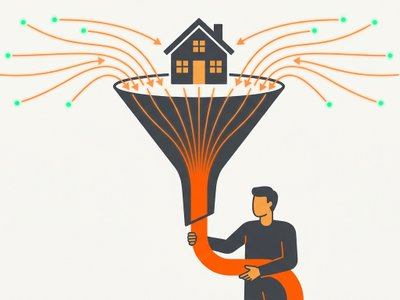
The owner's job shifts from preparing the house repeatedly to preparing it once, properly, and letting the material do the first hundred conversations.
Contents
You have probably never seen your own property like this
Most owners have walked their home thousands of times and never seen it the way a buyer now sees it. Not from the doorway with an agent talking over their shoulder, but alone, at eleven at night, on a phone, moving through the rooms at their own speed and going back to the one they did not understand.
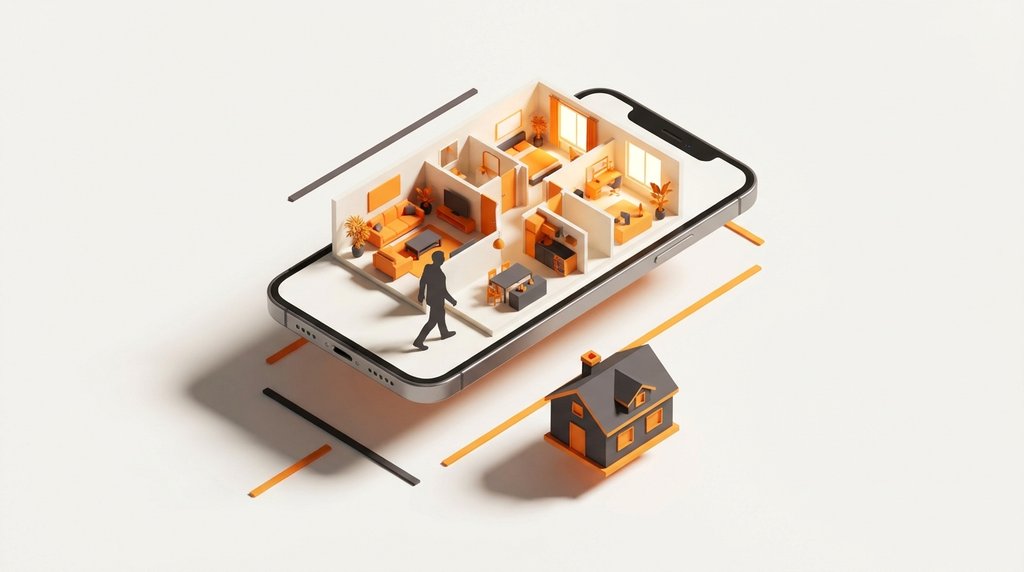
That is what a professional 3D tour is. It is not a video of the property and it is not a gallery with a spinner on it. It is a walkthrough the viewer controls, room by room, from any device, as many times as they like.
It changes the order of a sale. The opinion used to form during the first visit. Now it forms before the first message, and the visit becomes the moment a buyer confirms something they already decided they liked.
What the buyer actually does
Picture the sequence. Someone sees the listing, opens the tour and walks in at the front door. They move to the living room and turn around slowly, because the thing a photograph cannot tell them is how the space connects to the one next to it. They go to the kitchen and check whether the fridge is where they would put it. They walk to the main bedroom and count whether a double bed and a wardrobe both fit.
Then they go back. This is the part owners do not expect. Buyers revisit the room they are unsure about several times, from different angles, at their own pace. Nobody does that at a physical showing, where the agent is waiting and the next appointment is forty minutes away.
They open the floor plan and check the numbers against what they just walked. They open the sun-path view and find out whether the terrace gets the afternoon sun in January or sits in shadow. On domizello the tour, the sun-path plan and the exact map location open behind a free account, which is deliberate: walking through someone's home in 3D is close to visiting it, and the platform keeps a basic record of who entered, for the privacy and security of the people who live there.
By the time that person presses the contact button, they have spent fifteen or twenty minutes inside your property. They know where the bathroom is relative to the bedrooms. They know the kitchen is smaller than the photos suggested, or bigger. They have already decided whether it is worth a Saturday morning.
That is a different conversation from the one that starts with "is it still available?".
What each piece answers
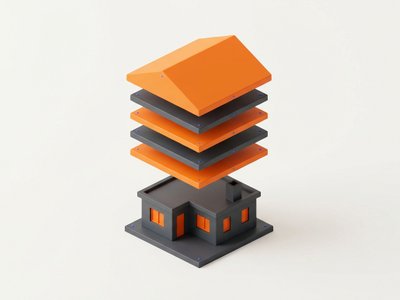
The tour is the center, but it does not work alone. Each piece of the package answers a question a buyer would otherwise have to ask, or would otherwise guess wrong about.
The 3D tour answers how the spaces connect. A photograph flattens a house into a series of unrelated rectangles; a walkthrough restores the sequence of moving through it.
The floor plans answer whether the furniture fits. In two dimensions for measurement, in three for volume and connection. This is where a buyer stops imagining and starts checking.
The sun-path view answers whether the property is bright. Orientation is one of the first things buyers want to know about a Uruguayan property, and the one photographs handle worst, because a photo is taken at one hour on one day.
The fly-through video answers the question in thirty seconds, for the buyer who is scrolling rather than deciding. It is also the piece that travels: it can be shared on social media and messaging, while the tour and the 3D plan stay on domizello.
The professional photographs answer the first filter, which is still a thumbnail in a list of forty other properties.
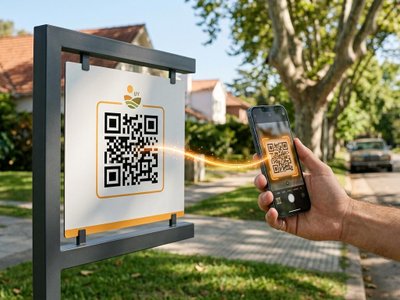
Together they form a single page the owner can send anywhere: one link, or one QR code, that opens the same complete presentation on a phone, a tablet or a computer, without the compression a messaging app applies to a video file.
Worth being honest about what none of this does. A tour cannot convey a damp smell, a thin wall, the noise of the street at two in the morning or the state of the building's common areas. It is not a substitute for walking through the door, and any owner who claims otherwise is selling something. What it does is make sure the person who walks through the door already knows the layout, so the visit goes to the questions that actually matter.
What changes on your side
The production happens in one visit. The house needs to be ready when the team arrives, and it needs to be empty of people and pets during the session, which is a morning of inconvenience and then nothing.
After that, the property is on show continuously. This is the part that changes an owner's week. There is no schedule of speculative visits, no taking a morning off because someone might come at eleven, no tidying the house four times for four people who were never going to buy. The material does the first hundred conversations, and the ones that reach you have already survived a filter.
It also works when the property is occupied. If you are still living there, or it is let, the tour was made once and it keeps working without anyone needing to open a door. That matters most exactly when it is hardest to show, in the weeks when buyer interest peaks and the house is full.
The enquiries change character too. On a domizello listing the buyer presses a contact button and a professional broker handles the conversation; the owner's phone number is never handed over. What reaches you is not a stranger asking whether the price is negotiable. It is a broker with a buyer who has already walked the property and wants to see the two things a screen cannot show.
And the listing keeps working in a market that does not help you. Uruguay has no shared listing database, so the same property can appear in several places with different prices and different photographs. A complete, current, single presentation is not a luxury in that environment. It is the thing that makes a buyer trust what they are looking at.
If you are preparing to sell, the practical order is: get the property ready once, have the material produced properly, and then let it work. A listing with only photographs now reads as incomplete, and the owners who feel it first are the ones competing in the busiest price bands.
The next step is to look at what publishing your own property involves, and to see your own house the way a buyer is about to see it.
Sources
domizello Help Center: "What is the interactive 3D tour?" – what every listing includes: an interactive 3D tour walked room by room from a phone or computer, a fly-through video, and a 3D floor plan with a sun-path simulation.
domizello Help Center: "Do I need an account?" – a free account unlocks the 3D tour, the 3D floor plan with sun path and the exact map location, with a basic record of who enters each property.
domizello Help Center: "What is in the Share tab?" – the 3D tour travels as a link or a button and never as a file, so buyers always walk through it on domizello; the photos and videos carry domizello's mark.
Frequently Asked Questions
What is the difference between a 3D tour and a video of my property?
A video is a fixed path that someone watches. A 3D tour is a walkthrough the viewer controls: they choose which room to enter, turn around inside it, and go back to the space they were unsure about. Both are part of the same package, and they do different jobs. The video travels on social media and messaging; the tour stays on domizello, where a buyer can spend twenty minutes inside the property.
Do buyers really use a 3D tour before visiting, or do they just look at the photos?
They use it, and they use it repeatedly. The behaviour that surprises owners is the return visit: a buyer goes back to the room they are unsure about several times, from different angles, at their own pace. That is not possible at a physical showing, where someone is waiting and the next appointment is close behind.
Does a 3D tour replace the physical visit?
No. A screen cannot convey a damp smell, thin walls, street noise at night or the condition of common areas. What the tour does is move the visit later in the process: the buyer arrives already knowing the layout, so the time in the property goes to the things only a physical visit can answer, and the people who come are the ones who already want to be there.
Can my property be filmed while I am still living in it?
Yes. Production takes one visit, and the house needs to be empty of people and pets during that session, which is usually a morning. After that the material keeps working without anyone needing to open a door, so the property stays on show while you go on living in it. The team photographs the home; it does not tidy, stage or move furniture, so the house needs to be ready when they arrive.
Who answers the enquiries when I publish my own property?
A professional broker does. The buyer presses the contact button on the listing and the conversation happens through the platform, so your phone number is never given out. What reaches you is a broker with a buyer who has already walked the property, not a stranger testing whether the price will move.