Key takeaways
- Conflicting square-meter figures across duplicate listings make buyers question the entire property file, leading to lower offers and longer due diligence.
- In Uruguay's no-MLS market, exposure without consistency divides trust; a single verified listing with 3D tour and floor plans anchors buyer confidence.
- Brokers who curate and verify listings gain more influence than those who simply publish first, as credibility outweighs reach.
Contents
A property that contradicts itself in public
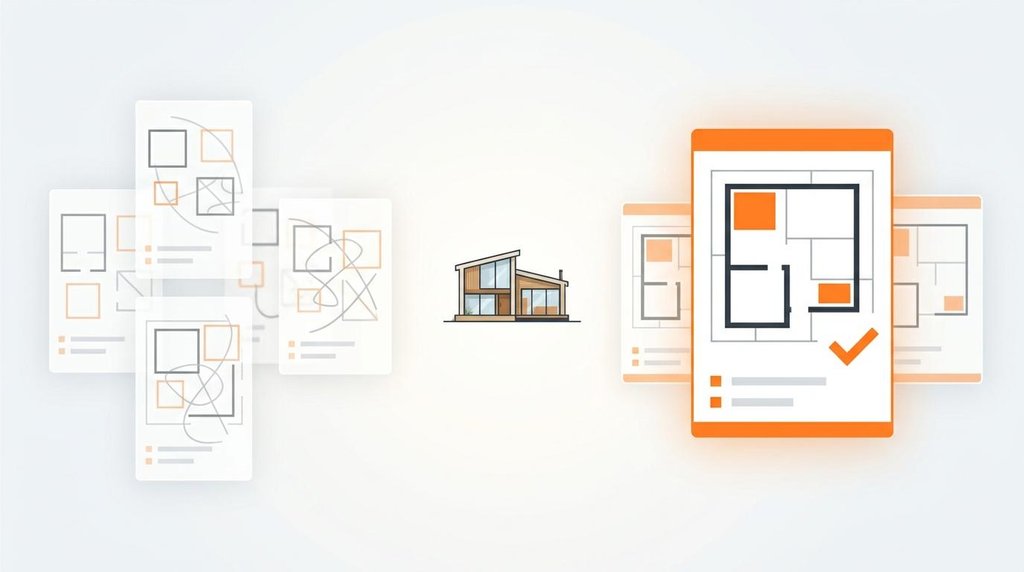
A seller puts an apartment on the market. A week later, it appears on three portals under six different listings. One entry shows a different square-meter figure than another. A third disagrees with both. Two of the six reuse the same living room photo with a different crop.
Buyers notice immediately. They do not file a complaint. They simply move on, or they carry the discrepancy into negotiations as evidence that something is unclear. For a broker, this is the quietest possible failure: the listing is everywhere and convincing nowhere.
For sellers, the cost is real. A property that cannot agree with itself does not look more available; it looks less reliable. In a market without a central listing system, that conflict is rarely an accident.
What conflicting data does to a seller
Different brokerages often measure a property in different ways. One uses total built area, another covered area, a third includes balconies or service rooms. Some reuse old floor plans. Others round figures for speed. The result is not fraud; it is fragmentation.
When a buyer sees three different square-meter numbers for the same property, they stop asking which one is right and start asking what else is wrong. Is the title clean? Is the owner really selling? Has the price shifted? Distrust of a single data point spreads to the entire listing.
The buyer response to mismatched data
That distrust has a direct commercial effect. Buyers discount what they cannot verify. They lower offers, request longer due diligence periods, or wait for a price correction. None of this means the property is flawed; it means the presentation has given them no stable fact to anchor to.
The seller's mistaken reassurance
Sellers often assume that appearing in several places means maximum exposure. In a fragmented market, the opposite can happen. Six entries compete with one another for the same audience, and each one weakens the authority of the others.
The common broker assumption is that more listings mean more reach. That is the friction point: reach without consistency does not multiply interest, it divides trust.
Where buyer confidence comes back
A single, verified listing changes the buyer's first impression. Instead of comparing the property against itself, the buyer can compare it against the market. That shift matters before any showing takes place.
A 3D tour and proper floor plans are especially useful here. A floor plan gives the buyer a fixed measurement: the layout, the orientation, the relationship between rooms. The tour lets them walk the space and check whether the photos match the geometry.
Why geometry beats photography
This is not about making a property look more beautiful. It is about making the information verifiable at a distance. A buyer who can inspect the spatial logic of an apartment before contacting a broker arrives with fewer doubts and a clearer sense of value.
For brokers, that changes the type of meeting. The showing is no longer the moment when the buyer discovers the property; it is the moment when they confirm what they already understood. Sellers benefit because serious interest converts faster, and the negotiation is anchored to facts rather than confusion.
Curation becomes the market skill
Uruguay's buy and sell market has no central MLS. That absence explains why the same property can appear multiple times with inconsistent data. It also explains why the broker who controls the quality of the listing holds more influence than the broker who simply publishes it first.
There is a market tension worth naming. Exposure is not the same as credibility. A property can be widely distributed and still be poorly understood by buyers. The platforms and teams that reduce duplication and verify the property file are doing something more valuable than increasing reach; they are increasing trust.
Domizello approaches this from the seller's side. An active property appears once on domizello, presented by one brokerage. Buyers see a single consistent record rather than six competing versions. That is a presentation rule, not an ownership restriction: sellers can keep working with other brokerages.
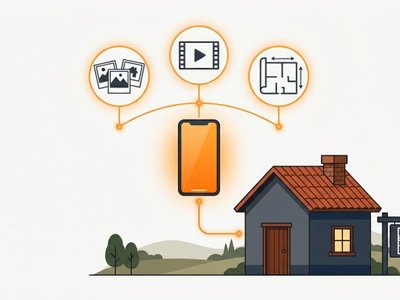
When the listing also carries a complete virtual file – a 3D tour, 2D and 3D floor plans, professional photos and a digital inventory – the buyer can verify the property before making contact. Those assets sit alongside the tour, not inside it, and they give the broker a concrete way to protect the seller's price position.
For a seller, the lesson is simple: a property that can be verified is a property that can hold its value. For brokers, the opportunity is clearer still. Uruguay's market is maturing, and the next stage belongs to those who treat listing accuracy as part of the sale, not as back-office detail.
Brokers interested in working this way can explore domizello's for-brokers program.
Frequently Asked Questions
Why does the same property in Uruguay appear with different square meter figures?
Uruguay has no central MLS, so different brokerages measure properties using different criteria such as total built area, covered area, or including balconies. Some reuse old floor plans or round figures for speed, which creates fragmented and conflicting data.
How do duplicate listings with inconsistent data affect property sellers?
Buyers see the discrepancy as a sign that something is unclear, which makes the property look less reliable. They may lower offers, request longer due diligence periods, or wait for a price correction, and competing listings weaken each other's authority.
What should buyers do when they find mismatched data for the same property?
Buyers often move on or carry the discrepancy into negotiations as evidence of unclear information. Distrust of one data point can spread to the entire listing, making them question the title, the seller's seriousness, or the price.
How can a verified listing with a 3D tour and floor plans restore buyer confidence?
A verified listing gives buyers a fixed measurement through floor plans and lets them confirm photos match geometry with a 3D tour. Buyers can inspect spatial logic before contacting a broker, arrive with fewer doubts, and negotiate based on facts instead of confusion.
Why is curation more important than listing volume in Uruguay's real estate market?
Without a central MLS, the broker who controls listing quality and reduces duplication holds more influence than one who simply publishes first. Platforms such as domizello, which shows one consistent record per property, are increasing trust rather than just reach.