Key takeaways
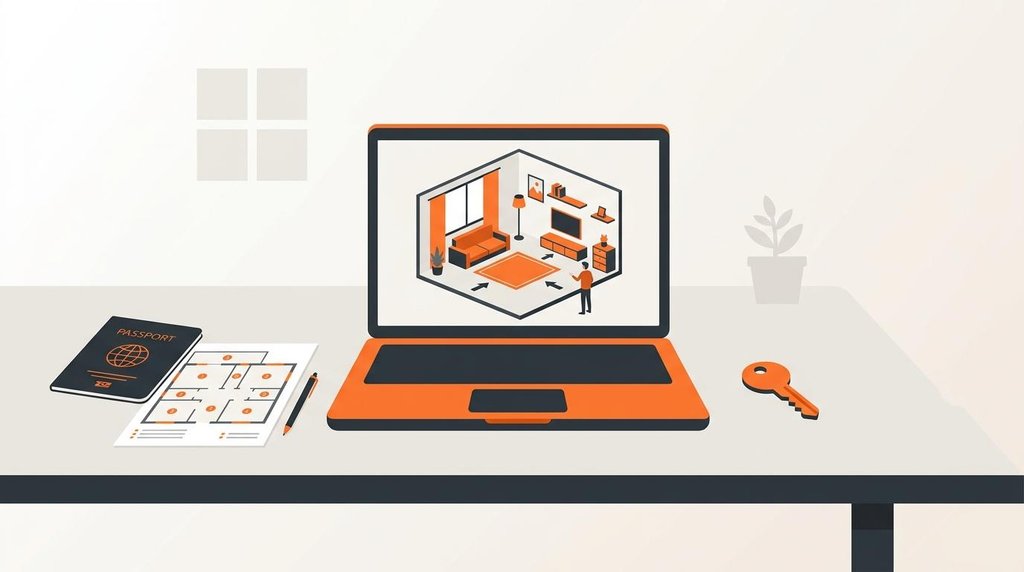
Remote buyers can legally purchase in Uruguay with just a passport and proof of funds, completing deals in 30-60 days without residency.
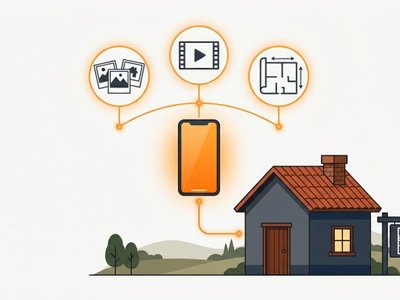
Complete digital files with 3D tours and floor plans filter out speculative visits, leaving only buyers who have already ruled out obvious deal-breakers.
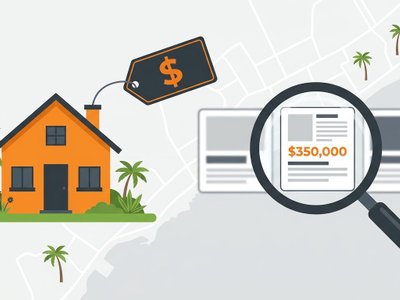
Montevideo prices range from USD 1,000 to over 4,400 per m², making accurate online pricing context essential for remote buyers to shortlist properties.
Contents
When the first visit is a confirmation
A buyer who asks to see a property in Pocitos or Punta del Este has often already walked through it. Not in person, but on a screen: the light in the living room at 4 p.m., the shape of the kitchen, the distance from the bedroom to the bathroom.
That changes the meaning of an in-person visit. The visit stops being a discovery and becomes a confirmation. For an owner selling in Uruguay, that is one of the most practical shifts in the market right now.
If the digital preview is incomplete, the buyer simply never requests the visit. If it is complete, the visit that follows tends to be shorter, more focused, and asked for by someone who has already ruled out the obvious reasons not to buy.
What a remote buyer can already do in Uruguay
Uruguay makes it unusually simple for foreign buyers to enter the market. No legal residency is required, there are no restricted zones, and a buyer needs a valid passport and proof of the origin of funds. Nothing more.
The notary's compliance team runs its own anti-money-laundering background check on every buyer as part of the legal process. That means the remote path is not a loose arrangement; it sits inside a formal notarial system.
Local agencies describe a typical remote purchase in clear stages: an initial brief, a curated shortlist within two to five days, live virtual tours during the first week or two, an offer and reservation, notarial title study, then signing and payment. Remote buyers may need a notarized power of attorney, apostilled where applicable, when distance prevents them from signing in person.
From reservation to deed, a typical window is 30 to 60 days, stretching toward 90 if bank financing is involved. The buyer's own costs include notary fees of 2 to 3 percent of property value, a 2 percent transfer tax on fiscal value, registry fees between USD 150 and 400, and a commission of 3 percent plus VAT per side.
Price expectations vary sharply by zone. Montevideo square-meter prices range from about USD 1,000 to over USD 4,400 depending on the area, while premium beachfront projects in Punta del Este can reach USD 7,000 to 10,000 per m². A well-located two-bedroom apartment in Pocitos may sit around USD 150,000 to 200,000. That spread means remote buyers rely heavily on accurate visual and pricing context before narrowing a search.
For a seller, the operational detail matters most: a serious buyer may be in another city or continent and still be further along than a local who casually asks to see the property. The first filter is the digital file, not the front door.
What a screen cannot confirm
There is a reason nobody with market sense treats a 3D tour as a substitute for a physical inspection. A guide for foreign buyers in Uruguay makes the same warning: if possible, visit in person before committing, because some things cannot be conveyed by video.
What the screen does not capture is often what determines daily life: how the building smells, how thin the walls are, what the street sounds like at night, whether the common areas are well maintained. A 3D tour can show that the bedroom window faces northeast; it cannot show whether the neighbors use the hallway as storage.
This is exactly why the first in-person visit has become a confirmation. The buyer arrives with a mental model already built. Instead of scanning every room for the first time, they are checking specific concerns that only a physical visit can resolve.
For the owner, that tension is useful. It filters out buyers who were never going to buy and leaves visits that are intentional. The screen does not sell the property; it qualifies the visit.
Serious visits, fewer wasted showings
When the first visit is already digital, the owner's time and the property's privacy are protected. A seller who occupies the home does not prepare for a stream of speculative visits. A seller with tenants does not coordinate viewings for people still at the curiosity stage.
Uruguay's market has long suffered from listing duplication and stale presentation. Buyers click through photos that do not match the reality of the property, then lose trust. A complete virtual file on a single listing solves that before the first enquiry arrives.
Some platforms now make that file available at production cost: an interactive 3D tour, floor plans, a sun-path viewer, professional photos, and a fly-through video. On domizello, those assets sit alongside a digital inventory and are produced without expensive gear or agency retainers, so an owner gets the same package an agency listing gets.
The buyer's path is still the same: enquire through a broker, not directly with the owner. That is the part worth protecting. A good digital presentation should route serious buyers into a professional conversation, not into an unstructured negotiation.
The market is maturing around informed visits
Uruguay's property market has never been short of foreign interest. What has changed is the expectation of the buyer before they ever cross an ocean or a city. The remote path is no longer exceptional; it is the first screening layer for a growing share of transactions.
For an owner, that is not a pressure to produce cinematic content. It is a nudge to present the property the way a serious buyer already expects: accurately, in three dimensions, with the documents and visual evidence that let an agent answer precise questions.
The practical step is to list with a complete virtual file and speak with an agent when serious enquiries arrive. The visits that follow will be fewer, but they will be real.
Sources
Ingar: remote-buying path and notarial requirements for foreign purchasers.
El País: price ranges by zone and caution to visit in person before committing.
Frequently Asked Questions
Can a foreigner buy property in Uruguay without visiting in person?
Yes. Uruguay allows foreign buyers to purchase property remotely. No legal residency is required, and there are no restricted zones. You need a valid passport and proof of the origin of funds. The notary's compliance team runs an anti-money-laundering background check as part of the legal process. Remote buyers may need a notarized power of attorney, apostilled where applicable, to sign documents from abroad.
What are the typical costs for a buyer in Uruguay?
Buyer costs include notary fees of 2 to 3 percent of property value, a 2 percent transfer tax on fiscal value, registry fees between USD 150 and 400, and a commission of 3 percent plus VAT per side. From reservation to deed, the process typically takes 30 to 60 days, or up to 90 days if bank financing is involved.
How long does a remote purchase take in Uruguay?
A typical remote purchase takes 30 to 60 days from reservation to deed. If bank financing is involved, it can stretch toward 90 days. The process includes an initial brief, curated shortlist, live virtual tours, offer and reservation, notarial title study, then signing and payment.
What should I check in person before buying a property in Uruguay?
A screen cannot confirm building smells, wall thinness, street noise at night, or maintenance of common areas. A 3D tour shows layout and orientation but not daily living conditions. If possible, visit in person to check these factors before committing.
How do virtual tours help sellers in Uruguay?
Virtual tours qualify buyers before they request a visit. A complete digital file filters out speculative visits and leaves intentional ones. Buyers arrive with a mental model, making the in-person visit a confirmation rather than a discovery. This protects the seller's time and privacy.