Key takeaways
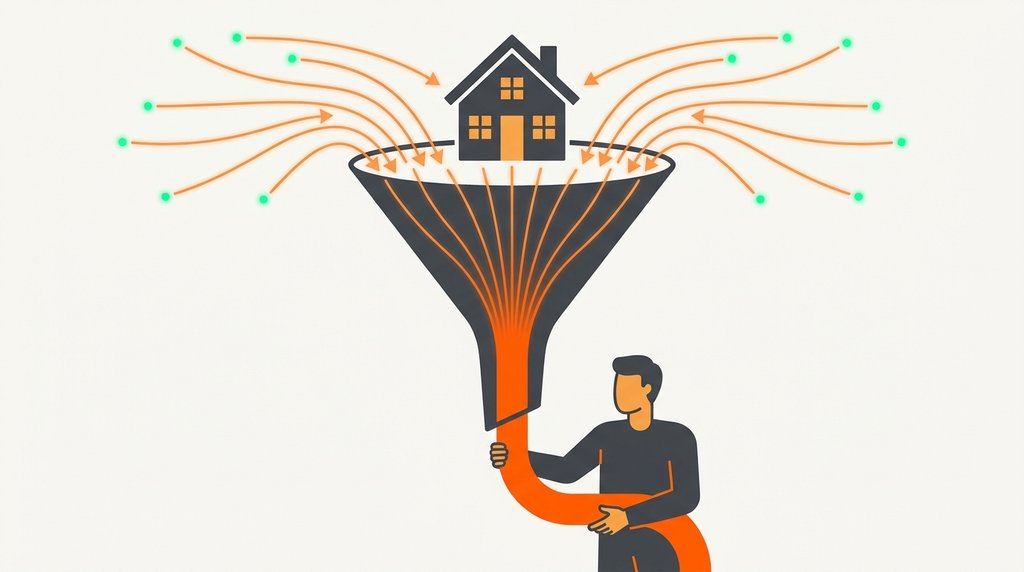
Most of what goes wrong when an owner sells alone is not about the property. It is about the owner becoming the only channel through which information, inquiries and negotiations reach a buyer.
The seven mistakes compound. Pricing without data produces a listing that sits; a listing that sits with only photographs produces no inquiries; no inquiries produces an owner who starts answering every call personally, which produces worse conversations.
Every one of them has a fix, and most of the fixes are about information rather than effort.
Before the list
A quick note on tone, because lists like this one usually turn into a lecture.
None of the mistakes below is stupid. Every one of them is what happens when a person sells a house once or twice in a lifetime, in a market with no shared listing database, no public record of sale prices, and no standard way of describing a property. The professionals who avoid these mistakes do not avoid them because they are smarter. They avoid them because they do this every week.
So this is not a list of reasons to hire somebody. It is a list of seven things that go wrong predictably, what each one costs, and what to do instead. The solutions are general and work on any platform.
1. Pricing from memory instead of from data
What happens. The owner starts from what they paid, adds what they spent on the kitchen, adds a margin for the trouble, and arrives at a number that feels defensible to them. Or they start from what a neighbor says their house is worth. Either way, the number has no relationship to what a buyer will pay this quarter.
The cost is not that the house does not sell. The cost is that it ages. A listing that has been published for six months at the wrong number carries that history into every conversation, and buyers read a long listing period as evidence that something is wrong with the property. Then the price drops, and the drop confirms the suspicion.
What to do instead. Uruguay does not publish final sale prices, so you cannot look up what a comparable house actually sold for. What you can do is work from asking prices and discount deliberately for the gap between asking and closing, which in this market is not small. Get at least one independent view: a professional valuation, or a broker who works the zone and has seen comparable properties go through. Then write down the reasoning, not just the number, because you will need it when somebody offers less and you have to decide whether they are negotiating or simply uninformed. How to price a home when sale prices stay private goes through the whole problem, including why cadastral value, bank appraisals, and asking prices all mislead in different directions.
2. Treating ten photographs as a complete listing
What happens. The photographs are fine. Some of them are good. But a photograph is taken at one hour on one day, from one angle, chosen by the person taking it. It cannot answer whether the furniture fits, which way the property faces, how the rooms connect, or what the second bedroom is really like at four in the afternoon.
So the buyer has questions, and the listing has no answers, and the buyer does what buyers now do: they close the tab and open the next listing. There is no rejected inquiry and no feedback. There is only a listing that was seen and did not convert, which looks exactly like a slow market.
What to do instead. Think of a listing as a set of questions it can answer, not as a set of images. The plan answers whether it fits. The sun path answers whether it is bright. A walkthrough the buyer controls answers whether it works. A video answers what it feels like to move through it. Photographs answer whether it is beautiful. A listing missing any of those leaves a question open, and an open question is where a buyer goes quiet. Why photographs alone no longer sell a property in Uruguay sets out the full argument, and what each piece of the package actually answers maps them one by one.
3. Opening the door to anyone who calls
What happens. The owner publishes a phone number, because that is what a for-sale-by-owner listing has always done. Then they spend three months letting strangers into their house: some genuine buyers, some agents working for a buyer, some people collecting information for a competitor, some who are simply curious. There is no way to tell them apart in advance, and the number is the price of finding out.
Owners consistently underestimate this one, and they underestimate the part that is not about safety. It is about being the unqualified first line of contact for everybody, at all hours, with no way to hand the conversation to someone else.
What to do instead. Put a professional between yourself and the first conversation. On domizello, a buyer presses Contact Agent on the listing, and the conversation runs through the platform, so the owner's contact details are never handed over, not even once the buyer is qualified. On an owner's listing, the form asks one question: whether the person is looking for themselves or is an agent acting for a client, and domizello's team assigns the inquiry by hand to an agent who sees that answer before accepting.
The general principle works anywhere: qualify before you open the door. A buyer who has already walked the property on screen and come through a professional is a different visit from a stranger who found a number.
4. Having no presence of your own
What happens. The property exists only inside somebody else's search results, in a slot that expires. When the listing period ends, the placement ends with it, and the owner is left with nothing: no page, no link, no material they can send to the cousin who asked last week, nothing to reuse if the sale falls through.
The second half of this mistake is the one that costs more. An owner who produces good material and then has nowhere to put it, and no way to send it, has paid for production and done nothing with it.
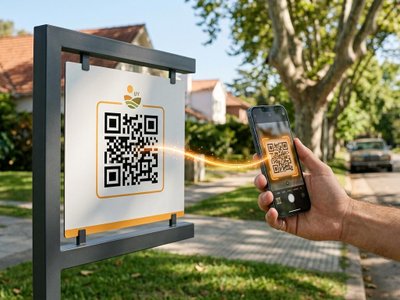
What to do instead. Have one address that is yours, or at least one address that carries the whole property and does not expire with a listing period. Every domizello listing gets a shareable mini-site, one link carrying the photographs, the video, the plans and the tour, which you can send on WhatsApp or print as a QR code. The photographs, the video and the 2D floor plan can be downloaded and used on your own channels; the 3D tour and the 3D floor plan stay on domizello and are viewed there rather than handed over as files or embedded on another site.
Nothing about this requires exclusivity. An owner can keep the property on their own channels and on other portals at the same time, and the material produced once works in all of them.
5. Underestimating the legal process
What happens. The owner assumes that selling without an agency means less paperwork. It does not. The legal sequence is identical either way, and it is not short: a reservation ticket, a promise of sale, a notarial title study, and a deed signed before an escribano.
Two specific traps. The first is signing a promise of sale without professional advice. That document should carry identification of the parties, a description of the property, the price, the payment schedule and due dates, the deposit or advance, a penalty clause, and the seller's declaration that the property carries no liens or encumbrances. It is governed by Ley 8.733, and it is binding. The second is assuming the escribano works for you. The escribano is a notary, not a lawyer: they study the title, the liens and the debts, and personally carry out the client due diligence that Uruguayan anti-money-laundering rules (Ley 19.574) require. They do not inspect the condition of the property, and they are not there to negotiate on your behalf.
There is also a tax side that surprises owners, because it is calculated on a base they did not expect. ITP applies at 2% of the cadastral valor real for the seller, with a further 2% for the buyer, and IRPF or IRNR applies at 12% on the gain. The cadastral value is a figure the tax authority sets, and it is not an estimate of what the house is worth. Exemptions exist in specific situations; the escribano is the person who tells you which applies to you.
What to do instead. Get the documents in order before you publish, not after somebody makes an offer. Have a professional read any promise of sale before you sign it. And if you are abroad at any point in the process, arrange the power of attorney early, because it has to be prepared in advance and legalized where it was granted. What actually happens when you sell your own house in Uruguay follows the whole sequence, including the parts that do not change when you do it yourself.
6. Publishing the same property in several inconsistent versions
What happens. The owner publishes on two or three places, writes a fresh description each time, rounds the square meters differently, uses different photographs, and adjusts the price on one of them but not the others. Now the same house says three different things online.
Buyers do not experience that as variety. They experience it as a reason not to trust any of the versions. A buyer who has seen three descriptions of your house does not know which to believe, and hedging by visiting all three is a rational response, which is how one property generates three unproductive visits and a seller who cannot understand why the interest is not converting.
What to do instead. Write the description once, fix the measurement basis once, and use the same text, the same numbers and the same photographs everywhere. This is not pedantry: in Uruguay the inconsistency is usually honest, because terraces, garages and the choice between measuring to the outer wall or the inner wall all produce different defensible figures. Where contradictory square meters come from explains the mechanics. Pick one basis, state it, and do not vary it. Each property appears once on domizello, which removes at least one source of the noise, and keeping price and status current is the owner's obligation, with changes reported within 72 hours.
7. Taking every inquiry on your own phone
What happens. This one looks like mistake 3, and it is different. Mistake 3 is about strangers in the house. This one is about the owner becoming the switchboard: answering the same six questions forty times, at all hours, in whatever state they happen to be in.
The cost is not only the time. It is that by the fortieth repetition the owner sounds tired, which makes them feel guilty, which makes the next conversation harder. And it is that an owner negotiating the sale of their own house is negotiating against their own attachment, without anybody in the room whose job is to be dispassionate.
There is a second cost that is easy to miss. When a buyer's agent brings a client, that agent is doing qualification work the owner is not equipped to do: separating the curious from the capable in the first two conversations. An owner who takes every inquiry directly does that work themselves, badly, forty times.
What to do instead. Let the inquiries land on a professional and let the professional bring you the ones that matter. On a domizello listing, the conversation runs through the platform, and when a buyer arrives with their own agent, that agent works the buyer side exactly as they would on any other listing. Selling without a listing agency does not mean the transaction has no professional in it.
If you would rather have an agent involved from the start, you can present your home on domizello with or without an agency, and you can ask your own broker to bring the property to the platform.
What all seven have in common
Read the list again and one thing stands out: only two of the seven are about the property. The other five are about the owner being the only channel through which information, inquiries, and negotiations reach a buyer.
That is the useful reframe, and it is the reason these mistakes are fixable. You do not have to become a better negotiator. You have to stop being the switchboard: let the listing answer the questions it can answer, let the numbers agree with each other, let the price rest on something other than memory, and let a professional take the first conversation.
Do those four things, and most of the list stops applying.
You can present your home on domizello with or without an agency. Here is what publishing it yourself involves.
Sources
GlobalTax: "Promesa de compraventa en Uruguay: cláusulas clave para extranjeros" (15 November 2026) – the four-step sequence (boleto de reserva, promesa de compraventa, escribano, escrituración), the minimum clauses of a promise of sale, and the ITP and IRPF/IRNR rates. Cites Ley 8.733.
GlobalTax: "Vender un inmueble en Uruguay siendo no residente: IRNR y retención" (15 November 2026) – IRNR at 12% on the gain for non-residents and the retention carried out at the deed.
domizello Help Center: "Why can't I contact the owner directly?" – every inquiry is handled by a vetted broker who carries professional liability: the listing's featuring broker or, when the owner listed the property directly, a broker that domizello assigns.
domizello Help Center: "What is in the Share tab?" – the 3D tour travels as a link or a button and never as a file; the photos and videos carry domizello's mark.
domizello Help Center: "Can I keep the property on my own website and other portals?" – domizello does not ask for exclusivity, so the property can stay on your own website and on other portals.
domizello Help Center: "How do I help the owner prepare for the shoot?" – the shoot is one session; the crew photographs and does not tidy, stage or move furniture; an adult opens at the agreed time and may leave during the shoot if reachable by phone.
Frequently Asked Questions
What is the most common mistake when selling a house without an agent in Uruguay?
Pricing from memory rather than from data, because it is the mistake that makes every other one worse. Uruguay does not publish final sale prices, so an owner who starts from what they paid and what they spent arrives at a number with no relationship to the current market. The property then sits, and a long listing period reads to buyers as evidence that something is wrong with it.
Do for-sale-by-owner listings take longer to sell in Uruguay?
There is no dated, published data that answers this for Uruguay, so any specific claim should be treated with suspicion. What can be said is that the factors which slow a sale are visible and fixable: a price that rests on nothing, a listing that cannot answer layout and orientation questions, inconsistent versions of the same property online, and an owner fielding every inquiry personally.
Is it risky to let strangers visit my house when I sell it myself?
Owners consistently underestimate this. Publishing your own phone number makes you the unqualified first line of contact for everyone, including agents working for a buyer and people collecting information for a competitor, with no way to tell them apart in advance. The alternative is a route where the inquiry is handled by a professional before it reaches you, so the visits that happen are from people who are already qualified.
What legal documents do I need to sell my house in Uruguay?
The sequence runs through a reservation ticket, a promise of sale governed by Ley 8.733, a notarial title study and a deed signed before an escribano. The promise of sale should carry identification of the parties, a description of the property, the price, the payment schedule and due dates, the deposit or advance, a penalty clause and your declaration that the property carries no liens. The escribano studies the title and personally carries out the client due diligence required by Ley 19.574, but does not inspect the condition or negotiate for you.
What taxes apply when I sell my own property?
ITP at 2% of the cadastral valor real for the seller, with a further 2% for the buyer, and IRPF for residents or IRNR for non-residents at 12% on the gain. Exemptions apply in specific situations and the escribano tells you which. Where IRNR applies, the tax is withheld at the deed. The cadastral value is set by the tax authority and is not an estimate of what the property is worth, so never use it to set your asking price.
Can I sell on domizello and still work with my own agent?
Yes. You can present your home on domizello with or without an agency. If you would rather have an agent involved, ask your broker to bring the property to the platform; a buyer's agent also works the buyer side on an owner's listing, exactly as on any other. Domizello does not compete with brokers for clients, and no exclusivity is required.
Why does it matter if my listing says different square meters in different places?
Because inconsistent numbers make a buyer distrust the whole file rather than just the number. The inconsistency is usually honest: terraces, garages and measuring to the outer wall versus the inner wall all produce different defensible figures. Pick one measurement basis, state it, and use the same text, numbers and photographs everywhere you publish.