Key takeaways
- Buyers search on their phones, so QR codes on signs capture interest while it is still warm.
- Recommendations from friends and family still matter to many buyers when they choose an agent.
- Dynamic QR codes and shareable pages create reusable, measurable marketing assets after the sale.
Contents
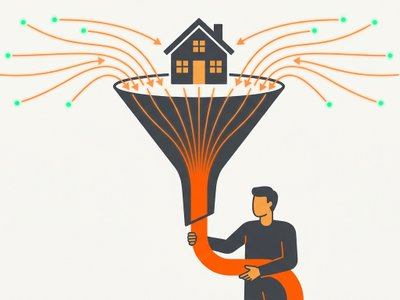
A listing on a portal buys presence, not preference
Most brokers in Uruguay treat the portal as the destination. But a listing on a portal is table stakes: visibility among dozens of similar apartments, with the same photos, the same price, and the same neighborhood filter.
The agents who get the call are not the ones who appear most. They are the ones who make the listing travel and make every touch measurable. That is the difference between being present and being remembered.
The moves that create that difference are practical and low-cost: QR codes, shareable mini property pages, and distribution beyond the local portal. No agency retainer and no monthly subscription.
Scannable signs, shareable pages, and a code you change after the sale
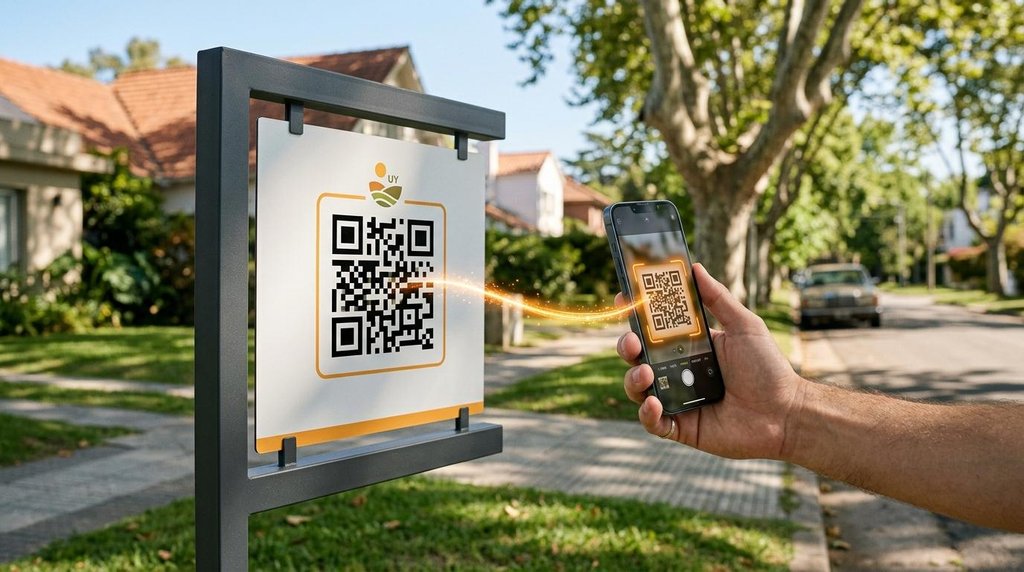
A QR code on a window or sign solves a very specific Uruguay problem: the buyer walks past a property on a Sunday, nobody is there, and the moment cools. A code can carry that person straight to the listing photos, floor plan, virtual tour, and broker contact while the interest is still warm.
Mobile-first behavior supports this. Most home buyers now use a phone at some point in their search, so the person walking past the sign is usually already holding the device that can scan it. The task is to put the listing in front of them in the physical moment.
Dynamic QR codes are the tactical upgrade. A static code locks one destination permanently. A dynamic code lets the broker repoint the same printed sign rider to the next listing after a sale. Print 'Scan for photos and price' once, and the sign becomes reusable inventory instead of a per-property cost.
Placement is where the value appears. Useful spots include:
- For-sale signs and window cards – route to the property page or virtual tour, not just the agency homepage.
- Flyers and open-house sheets – link to full photos, pricing, and walkthroughs without printing a ten-page dossier.
- Mailers and local ads – use a unique code per neighborhood or campaign so scan data shows which area responded.
- Business cards and email signatures – point to an agent profile, recent listings, or a booking page instead of a static contact block.
A code only works when the person knows what it does. Put a clear call to action next to it, keep it at least 2.5 centimeters wide, and link only to a mobile-friendly page. A branded code with agency colors outperforms a bare black-and-white square.
Scan analytics also change the conversation with sellers. Dynamic codes can show total scans and the city or device type behind them, though they cannot identify individual people. A broker can show a seller that report as evidence the listing is being actively marketed, not just uploaded and forgotten.
Business cards still change hands at every meeting, and a card is often kept long after the conversation ends. A QR code on a card removes the step of typing a name or phone number: it can open a valuation page, a link-in-bio, or a current listing.
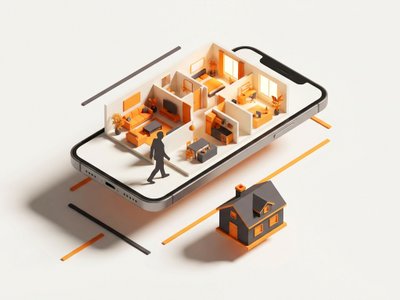
The same principle applies to shareable property pages. A single mobile-friendly page per property – photos, price, virtual tour, contact – can be sent by WhatsApp, linked from Instagram, or attached to a code. It acts as a mini property site that travels with the conversation instead of waiting for someone to search the portal.
The paid-lead trap hiding inside every portal tab
There is an uncomfortable number behind digital marketing's sales pitch. Paid third-party leads are a cost many brokers find hard to turn into closed business.
Look at where buyers actually come from: many still find their agent through a friend, neighbor, or relative. Add the weight people give to recommendations from those they know, and the picture gets clearer.
Uruguay's market makes this tension sharper. There is no central MLS, so a listing depends on a patchwork of portals, windows, WhatsApp messages, and agency networks. Brokers who rely only on paid portal placement are renting space on a crowded shelf. They are not building a channel that keeps working after the listing expires or the budget is cut.
That does not mean abandoning portals. It means treating them as the shelf, not the strategy. The layers around that shelf – a scannable sign, a shareable property page and a professionally produced tour and video – are what make a broker distinct.
Global-platform distribution follows the same logic. The fly-through video, photos and floor plans can be shared on the platforms foreign buyers use, while the listing link or QR code brings them to the 3D tour on domizello.
The playbook that compounds after the sign comes down
The broker who wins in Uruguay's purchase market will not be the one with the most portal exposure. It will be the one who turns every sign, card, flyer, and listing into a measurable digital entry point – and who keeps those assets working after the sale.
That changes the cost structure. Instead of an agency retainer, the stack is dynamic codes, mobile-friendly property pages, a consistent video habit, and a distribution path that reaches buyers beyond the local portal. On domizello, the 3D tour, video, plans and photos are produced by domizello in one visit, so the broker does not have to build that layer alone.
Domizello was built around this market reality. For brokers assembling that playbook, the broker program offers a way to put a complete digital product in front of buyers without turning marketing into a monthly gamble.
The portal is table stakes. The broker's own marketing is the game.
Frequently Asked Questions
Why isn't a listing on a real estate portal enough in Uruguay?
A portal listing is table stakes, not a strategy. Buyers see dozens of similar apartments with the same photos, price, and neighborhood filters. In Uruguay's market without a central MLS, the agents who get calls are those who make listings travel through QR codes, shareable property pages, and distribution beyond the portal, not those who simply appear most often.
How can QR codes help real estate agents capture buyer interest?
QR codes solve the cooling moment problem when a buyer walks past a property and nobody is there. A code on a sign, flyer, or business card sends a mobile user straight to listing photos, floor plan, virtual tour, and broker contact while interest is still warm. Useful placements include for-sale signs, window cards, open-house sheets, mailers, and email signatures, always with a clear call to action and a mobile-friendly landing page.
What is the difference between static and dynamic QR codes for listings?
A static QR code locks one destination permanently, so a printed sign rider becomes useless after the sale. A dynamic QR code lets the broker repoint the same code to the next listing, making printed signs reusable inventory instead of a per-property cost. Dynamic codes can also track total scans, city, and device type to show sellers the listing is being actively marketed.
What is a shareable property page and why should agents use one?
A shareable property page is a single mobile-friendly page per property with photos, price, floor plan, virtual tour, and contact details. It can be sent by WhatsApp, linked from Instagram, or attached to a QR code. It acts as a mini property site that travels with the conversation instead of waiting for someone to search a portal.
How effective is paid third-party lead generation for real estate agents?
Paid third-party leads are a cost many brokers find hard to turn into closed business. Many buyers still find their agent through a referral from someone they know. In Uruguay, this makes low-cost owned marketing layers like QR codes, shareable pages, and domizello's broker program more reliable than renting paid portal space.