Key takeaways
Uruguay's lack of a central MLS leads to the same property listed with different square meters, causing remote buyers to hesitate and move on.
Listings with interactive floor plans and 3D tours get up to 68% more views and 75% more saves, showing that buyers engage more when they can verify layouts themselves.
On domizello, each active property appears only once, presented by one brokerage, eliminating the trust problem of a house competing against itself with conflicting data.
Contents
A Mansion That Shrinks and Grows Depending on the Portal
Imagine a property that shows up three times across three portals. One listing says 834 m². Another says 1,098. A third rounds it to 1,100. The buyer is not standing in Punta Carretas with a tape measure; she is in São Paulo, scrolling at midnight, trying to decide whether to book a call.
She cannot tell which figure is real. So she does the rational thing: she hesitates. Uncertainty like this does not produce low offers. It produces no offers.
That is the quiet cost of fragmented listing data in Uruguay's purchase market. It is not a technology problem. It is a trust problem, and it starts long before the first visit.
Where Contradictory Square Meters Come From
Uruguay has no central MLS that forces every listing to carry one verified surface area. That, which sounds like a technical detail, is the root of half a dozen headaches for any broker: duplicate listings, stale prices, photos that do not match the floor plan, and total areas that shift depending on who measured them.
A terrace becomes part of the living area. A garage gets included, then not. If the original plan is missing, someone may measure to the outside wall, someone else to the inside. Each version can be honestly produced and still be different.
For a local buyer, that may be manageable. For a remote or international buyer, it is not. They cannot walk the property. Every inconsistency reads as a reason to distrust the listing, not just the number.
Remote buyers are not a small edge case. In 2024, 97% of U.S. buyers used the internet during their search, and 52% found the home they bought online; only about 4% found it through a yard sign or open house sign. The buyer who will eventually fly to Montevideo is almost certainly eliminating properties from another country first.
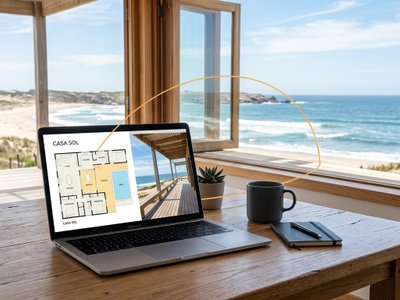
When listings with interactive floor plans and 3D tours get up to 68% more views and 75% more saves than photo-only listings, the message is not about flashiness. It is about verification. Buyers engage more when they can check the layout themselves.
The same pattern shows in agent-client relationships: 82% of clients respond positively when agents integrate technology into the process. That is not because tech impresses; it is because tech reduces the number of unanswered questions.
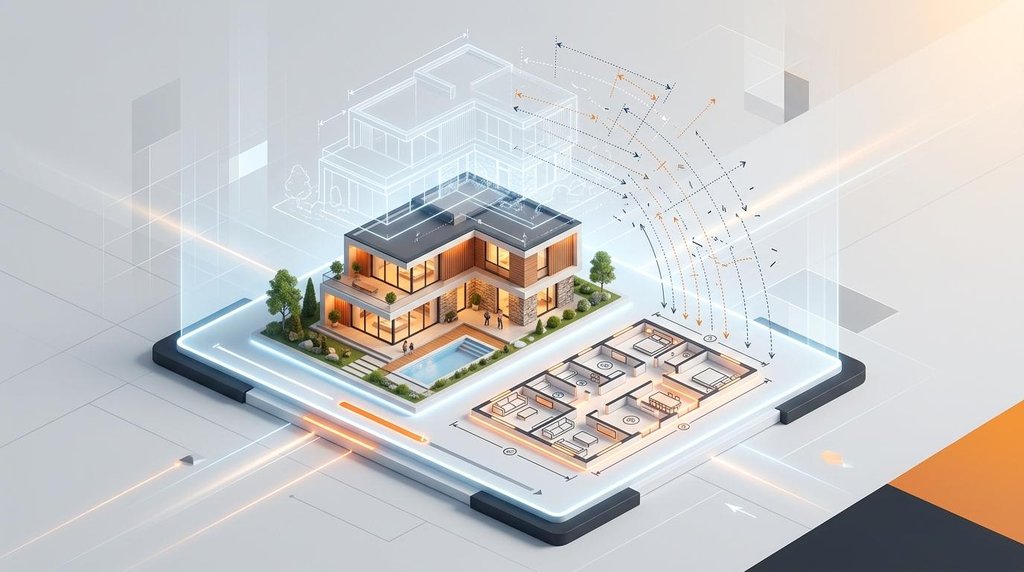
Interactive 3D tour: lets a buyer move through the property without being there.
Floor plans: show dimensions and circulation, not just finishes.
Digital inventory: records what is actually included, so the offer is based on the same facts.
Those tools work when they sit alongside the listing, not when they decorate it. A measured floor plan, a sun-path viewer, and a consistent inventory give a buyer something a photograph cannot: dimensional certainty.
When the Portal Itself Becomes the Risk
Here is the uncomfortable part for brokers: the portal that should generate leads can quietly destroy them. A buyer who sees conflicting square meters does not blame the previous agent or the owner. They blame the listing ecosystem, and they move to a market that feels cleaner.
The honest caveat buried in vendor material is worth keeping in view: virtual staging and digital tours can reduce uncertainty, but results vary by market, pricing, and listing condition. Uruguay is not a high-volume market, and a polished tour of a misleading layout will not rescue a bad price.
That means the real work is not adding more visuals. It is making the listing match the property in a way a buyer can verify from anywhere. A measured floor plan, a consistent total area, and a digital inventory turn a remote inquiry into a qualified visit.
Some industry claims go further – sales cycles shortened by 1.7 times, engagement up 87 percent through immersive experiences. Treat those as vendor arithmetic, not market evidence. No platform can compress a purchase cycle if the underlying listing data is inconsistent.
On domizello, an active property appears only once, presented by one brokerage. That is a presentation rule, not a restriction on the owner. It removes the most visible version of the trust problem: the same house competing against itself with three different area figures.
The Buyer Who Verifies Is the Buyer Who Offers
The broker's job is no longer just to list. It is to close the gap between what a portal says and what a property is. In a market without a central MLS, the broker who controls that gap becomes the one buyers trust enough to contact.
For Uruguay, this is a maturity moment. International buyers are already researching online, already comparing layouts, and already discarding properties that look inconsistent. The brokers who treat a measured floor plan as seriously as a price will be the ones those buyers call.
That is the logic behind domizello: the listing should earn trust, not exhaust it. Brokers who want to work that way can ask about the broker program.
Frequently Asked Questions
Why does the same property show different square meters on different Uruguay portals?
Uruguay has no central MLS to enforce one verified surface area. Different listings may include a terrace, garage, or exterior wall measurement differently, so each version can be honestly produced and still show conflicting totals.
Does Uruguay have an MLS like the United States?
No. Uruguay does not have a central MLS that forces every listing to carry one verified surface area. The absence of that system is a key reason for duplicate listings, stale prices, and total areas that shift depending on who measured them.
How do floor plans and 3D tours help remote buyers evaluate Uruguay property?
They give buyers dimensional certainty before visiting. Interactive floor plans and 3D tours let a buyer check layout and circulation from another country. Listings with these tools can receive up to 68% more views and 75% more saves than photo-only listings, though results vary by market and listing.
What should buyers check to verify a property's true size in Uruguay?
Look for a measured floor plan, a consistent total area, and a digital inventory of what is included. A listing that matches the property in a way you can verify from anywhere turns a remote inquiry into a qualified visit.
Why does domizello show each active property only once?
On domizello, an active property appears only once, presented by one brokerage. This removes the most visible version of the trust problem: the same house competing against itself with three different area figures. It is a presentation rule, not a restriction on the owner.