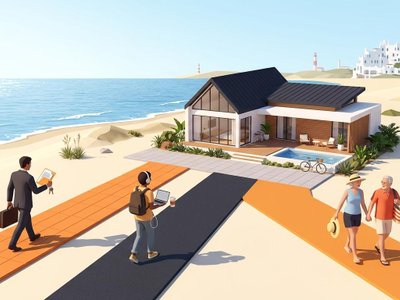
Key takeaways
Buyer expectations did not rise because buyers changed. They rose because the questions that used to wait for a phone call or a visit now get asked earlier, on a screen, at eleven at night.
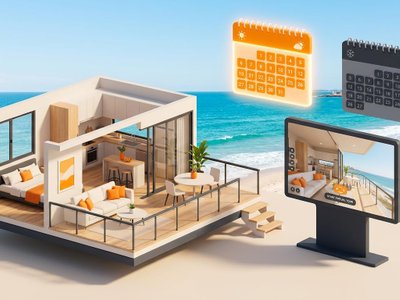
The new standard is not more photographs. It is a listing that can answer layout, light, condition and measurement without a human being in the loop: a walkthrough, a video, floor plans with the sun path, and data that matches itself.
A listing that cannot answer those questions does not lose the buyer to a better house. It loses the buyer to a better listing, and the owner never hears about it.
Contents
The call that never happens
There is a version of a property search that leaves no trace, and it is now the most common one.
A buyer sees a listing. They look at the photographs. They want to know whether the second bedroom is really a bedroom, whether a sofa fits in the living room, whether the terrace gets afternoon sun, and how the kitchen connects to the rest of the house. The listing has ten photographs and a phone number.
They do not call. Calling means identifying themselves, explaining what they are looking for, and starting a conversation they may not want. So they close the tab and open the next listing, which answers the question without asking anything of them.
The owner of the first property never learns this happened. There is no rejected inquiry, no awkward call, no feedback. There is only a listing that was seen and did not convert, which looks exactly like a slow market.
This is the change that matters in 2026, and it is not about technology. It is about where the questions get asked.
What actually changed in buyer behavior
Buyers did not become more demanding. They became less willing to pay a social cost for information.
Twenty years ago, finding out whether a house had a usable second floor required a visit. Ten years ago it required a phone call. Now it requires a screen and thirty seconds, and buyers have adjusted to that. When a listing cannot answer the question on screen, the buyer does not escalate to a phone call. They move on, because the next listing might answer it.
Three behaviors follow from that, and all three are visible in how people search.
They measure before they call. Furniture does not lie and neither does a floor plan. A buyer with a sofa, a bed and a wardrobe wants to know whether the rooms take them, and they want to know before they spend a Saturday. A listing with no plan pushes that question into the visit; a listing with a plan answers it in advance.
They check the light. Orientation is the question photographs cannot answer, because a photograph is taken at one hour on one day. A north-facing living room and a south-facing one look identical in a well-lit image. Buyers know this, and they have learned to distrust a photograph that does not tell them when it was taken.
They evaluate the neighborhood remotely. Especially buyers from abroad, who now do a large part of the work before booking a flight. A remote buyer filters by floor plans, sun path and walkthrough before they travel, and the ones who arrive have already decided the property is plausible.
None of this is a Uruguayan peculiarity. It is what happens anywhere that search moved onto a phone. What makes it sharper here is that a photograph-only listing now reads as incomplete rather than as normal.
Search now has a first filter that is not human
There is a second change underneath the first one, and it is less visible.
A growing share of property searches does not begin on a portal. It begins with a question typed into an assistant: what does a two-bedroom in Pocitos cost, which neighborhoods hold value, what should I check before buying in Uruguay. The answer that comes back is assembled from a handful of sources that the system considers structured and consistent.
That changes what a listing has to be. A listing becomes an answer when its attributes are structured and its description is consistent. A property described in prose with no floor area, no orientation and no room-by-room breakdown is not wrong. It is simply harder to use, and harder to use means skipped.
For an owner this has a practical consequence that has nothing to do with artificial intelligence: fill in every field. Not because a robot is reading it, but because a buyer is, and because the same information serves both.
What the new standard looks like
Strip away the product language and the expectation is four things.
A walkthrough the buyer controls. Not a video somebody else edited, but a route the buyer walks themselves, room by room, at their own pace, from a phone or a computer. The difference matters: a video shows what the editor wanted to show, a walkthrough shows what the buyer wants to see. On domizello every listing carries an interactive 3D tour of that kind, produced in one camera visit.
Floor plans, and the sun path on them. Plans answer the measurement question. The sun path answers the orientation question. Together they resolve the two things a photograph structurally cannot.
A video and photographs that carry the feeling. The fly-through video gives a sense of movement through the space; the photographs give the finish, the light and the detail. These are the pieces a buyer can hold onto and share.
A route to a person that does not require giving up privacy. Buyers increasingly expect to ask a question without publishing their phone number, and owners increasingly expect not to be the one answering. On a domizello listing the buyer presses Contact Agent and the conversation runs through the platform, so the owner's contact details are never handed over.
One thing worth being precise about, because it is where expectations and reality diverge: the tour and the 3D floor plan are viewed on domizello and are not handed over as files or embedded elsewhere. The tour, the sun-path plan and the exact map location open behind a free account, which is deliberate. Walking through someone's home in 3D is close to visiting it, and the platform keeps a basic record of who enters, for the privacy and security of the people who live there. The video, the photographs and the 2D floor plan travel.
The part nobody thinks is marketing: accurate data
There is a fifth expectation, and it is the one owners most often fail without realizing.
Buyers expect the numbers to agree. Square meters on the listing, square meters in the plan, square meters in the description, expenses in the same currency and the same period. When those do not match, the buyer does not assume a typo. They assume the file is unreliable, and they discount everything else in it.
In Uruguay this problem is structural. There is no shared listing database, so the same property can be published six times with three different sizes, and each version looks authoritative to whoever finds it first. Where contradictory square meters come from is worth understanding, because most of the time the owner is not lying: terraces, garages and the choice between measuring to the outer wall or the inner wall all produce different honest numbers.
The fix is not complicated and it is entirely within the owner's control. Pick one measurement basis, state it, and use it everywhere. One property, one consistent record. A buyer who has seen three versions of your house does not know which to believe, and hedging by visiting all three is a rational response, which is how one property generates three unproductive visits.
What photographs still do better than anything else
It would be easy to write this as an argument against photography, and that would be wrong.
A photograph is still the only medium that carries finish and light honestly. A walkthrough tells a buyer whether the room works; a photograph tells them whether they want to stand in it. Texture, joinery, the quality of a window frame, the way light falls on a floor at four in the afternoon: none of that survives a moving image as well as it survives a still one.
The mistake is not using photographs. The mistake is using only photographs, and then treating the listing as complete.
The same applies to video. A fly-through video is the piece of the package people share, and it does a job nothing else does: it gives a sense of movement and sequence, of how one room leads to another. But a video is edited, which means it has a point of view, which means a buyer cannot use it to answer a question the editor did not anticipate.
Each piece answers a different question. The plan answers whether it fits. The sun path answers whether it is bright. The walkthrough answers whether it works. The video answers what it feels like to move through it. The photographs answer whether it is beautiful. A listing missing any of them leaves a question open, and an open question is where a buyer goes quiet.
How to check your own listing in ten minutes
This is the useful part, and it works on any platform.
Open your own listing on a phone, not a computer, because that is where most buyers will see it. Then answer these questions using only what is on the screen.
Can I tell how the rooms connect? Not how many there are. How you walk from one to the next.
Can I tell whether my furniture fits? If the answer requires a visit, the listing is missing a plan.
Can I tell which way the property faces and what that means at four in the afternoon? If the answer requires a phone call, the listing is missing orientation.
Do the square meters on the listing match the plan and the description? If they do not, fix this before anything else. It is the cheapest correction available and the most expensive one to leave.
Can a buyer ask a question without giving me their phone number, and can I avoid giving them mine? If not, expect the inquiries to be fewer and less qualified than they should be.
Would I keep reading if this were not my house? The honest answer to this one is worth more than the other five together.
Where the listing fails these questions, the fix is almost never better photography. It is a missing piece of information, and what each piece of the package actually answers for a buyer maps them one by one.
You can present your home on domizello with or without an agency. Here is what publishing it yourself involves.
Sources
domizello Help Center: "What is the interactive 3D tour?" – what every listing includes: an interactive 3D tour walked room by room from a phone or computer, a fly-through video, and a 3D floor plan with a sun-path simulation.
domizello Help Center: "Do I need an account?" – a free account unlocks the interactive 3D tour, the 3D floor plan with sun path and the exact location on the map, with a basic record of who enters each property.
domizello Help Center: "Why can't I contact the owner directly?" – every inquiry is handled by a vetted broker who carries professional liability: the listing's featuring broker or, when the owner listed the property directly, a broker that domizello assigns.
domizello Help Center: "What is in the Share tab?" – the 3D tour travels as a link or a button and never as a file; the photos and videos carry domizello's mark.
Frequently Asked Questions
What do buyers expect from a property listing in 2026?
A listing that answers their questions without a phone call: how the rooms connect, whether their furniture fits, which way the property faces, and what the condition is like. In practice that means a walkthrough the buyer controls, floor plans with the sun path, a video, professional photographs, and data that agrees with itself. The expectation is not more photographs; it is fewer open questions.
Are photographs still enough to sell a house in Uruguay?
They are necessary but not sufficient. A photograph is still the best medium for finish, texture and light, and no walkthrough replaces it. What a photograph cannot answer is whether the furniture fits, which way the property faces, or how the rooms connect, because it is taken at one hour on one day. A listing with only photographs leaves those questions open, and an open question is where a buyer goes quiet.
Why does a 3D tour open behind an account instead of being public?
Walking through someone's home in 3D is close to visiting it, so the platform keeps a basic record of who enters, for the privacy and security of the people who live there. A free account unlocks the interactive 3D tour, the 3D floor plan with sun path and the exact location on the map. The video, the photographs and the 2D floor plan do not require an account and can be used elsewhere.
Does an interactive tour replace the visit?
No. A tour cannot convey a damp smell, thin walls, the noise of the street at two in the morning or the state of a building's common areas. What it changes is which visits happen: the ones that remain are visits from somebody who already likes the property and has come to confirm it, rather than visits that were only ever going to ask questions the listing could have answered.
Why do the square meters on my listing matter so much?
Because inconsistent numbers make a buyer distrust the whole file, not just the number. Terraces, garages and measuring to the outer wall versus the inner wall all produce different honest figures, so pick one basis, state it, and use it everywhere. In a market with no shared listing database, where one property can appear several times with different sizes, consistency is one of the few signals a buyer can rely on.
Is this about technology, or about selling?
About selling. The reason a walkthrough, a plan and a sun path matter is not that they are impressive; it is that they answer the questions a buyer would otherwise have to ask a human being, and buyers increasingly prefer not to. Meeting that expectation is what separates a listing that converts from one that is merely seen.