Key takeaways
- Rental bond insurance in Uruguay requires a signed inventory before keys are handed over; without it, damage claims are practically impossible.
- Policy conditions cap damage coverage at 3x monthly rent and unpaid rent at 18x, despite marketing claims of up to 5x and 36x.
- Owners have only 20 days to submit damage claims and 60 days for unpaid rent, making a pre-existing dated 3D tour critical evidence.
Contents
- A dated 3D record changes what a home can prove
- What an insurer actually checks before paying a claim
- The signed inventory is the first test
- Deadlines that quietly close claims
- The gap between marketing promises and policy conditions
- Uruguay's condition records are still scattered
- Build the evidence file before the negotiation starts
A dated 3D record changes what a home can prove
Most owners think of a 3D walkthrough as a way to show the kitchen. It is also the clearest record of what that kitchen looked like before the water stain appeared.
A tour captured this week is dated evidence: room by room, wall by wall, with the furniture in place. For someone selling a home in Uruguay, that matters well beyond the listing. It is the baseline an insurer will ask for when something goes wrong, and the reference a cautious buyer can check against later.
Most sellers keep scattered phone photos and a vague memory of when the crack first showed. The owner who has a structured visual file – the tour, the floor plans, the dated inventory – starts every condition dispute one step ahead.
What an insurer actually checks before paying a claim
Rental bond insurance in Uruguay makes the principle formal. The policy conditions are direct: to claim property damage against a tenant, the owner must have completed a detailed inventory of the condition before the keys were handed over, signed by both parties and ideally backed by a printed and signed photographic record.
Without that initial inventory, a damage claim is practically impossible. The insurer is not being difficult; it is applying a simple logic. Damage can only be measured against a baseline. No baseline, no measurable loss.
Porto Seguro's general conditions make the inventory an obligatory and excluding requirement. That point is worth reading carefully before the property goes on the market, especially if the home was rented at any time during your ownership.
The same baseline logic applies to a sale. If a pipe bursts while the house is being shown, or a contractor chips a floor during staging, the insurer will want to know the condition beforehand. A 3D tour with a visible capture date and a room-by-room inventory is far stronger than a handful of phone photos.
The signed inventory is the first test
The inventory is not a marketing artifact. It is the document that defines what was already damaged, what counts as ordinary wear, and what the owner can actually claim. Policy language excludes ordinary wear and tear, the passage of time, pre-existing dampness, and damage to gardens and pools.
That list matters for a seller too. Buyers often ask whether a mark is new or old. A dated record from before the listing gives an answer that does not depend on memory.
The 3D tour works well here because it captures spatial context. Unlike a single photograph, it shows a room from multiple angles and distances. When paired with a digital inventory, it becomes a room-by-room statement of condition.
Deadlines that quietly close claims
The other part owners overlook is timing. Under the same policy conditions, an owner has 20 calendar days from receiving the keys to submit the final damages declaration, with repair budgets and photographs. Report unpaid rent later than 60 calendar days and the insurer will not cover the months before the report.
Those windows are not long. They reward the owner who already has the visual record in place, because gathering evidence after the fact eats directly into the time allowed.
For a sale, similar timing applies: the moment you know about damage is the moment the clock starts. If you can attach a dated pre-sale tour to the claim file, you spend less time proving what changed.
The gap between marketing promises and policy conditions
Rental bond products in Uruguay are sometimes advertised with attention-grabbing figures. The policy conditions tell a quieter story: damage coverage is capped at three times the monthly rent, even when commercial messaging mentions up to five. For unpaid rent, the general conditions set a maximum liability of 18 times the monthly rent, despite advertising references to 36 months.
This gap is not a technicality. It changes what a property record has to do. If the recoverable amount is lower than expected, the owner's best leverage is a clear, dated demonstration of the condition and the damage. The inventory stops being paperwork and becomes the case itself.
The same caution applies to selling. Sellers who assume the future will accept their word usually discover that repair budgets, photographs and dated records carry more weight. An insurer, a court or a hesitant buyer will all ask the same question: what does the evidence show?
Uruguay's condition records are still scattered
Uruguay does not have a central database where every property's condition is stored and updated each time it changes hands. What exists is fragmented: some notaries keep files, some insurers require inventories, many owners have nothing at all.
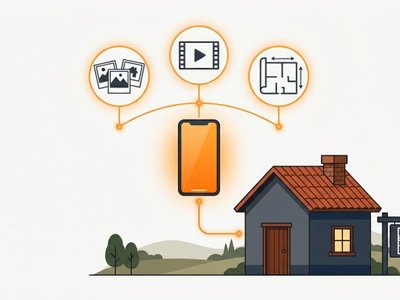
That fragmentation is why a 3D tour produced for a listing has value beyond marketing. It creates a consistent visual snapshot at a known date. If the same record sits alongside the floor plans, sun-path viewer and digital inventory, the owner has something close to a condition file without having to assemble one from scratch.
This is the quieter shift in the market. Sellers are beginning to treat visual documentation as evidence, not just as a way to attract buyers.
Build the evidence file before the negotiation starts
A 3D tour is usually commissioned to sell the house. The smarter move is to treat it as two things at once: a buyer-facing preview and a dated evidence file for the seller.
Once the tour is done, keep it with the floor plans, the photos and the digital inventory. Note the capture date. If damage occurs before the transfer, attach the file. If a buyer questions a condition, share the relevant room. The documentation that helps an insurer is the same documentation that keeps a sale calm.
For sellers preparing a property in Uruguay, the practical next step is to list it with a complete visual record and talk with an agent about how the condition file should be assembled before showings begin.
The market rewards owners who can show what the home was like, not just describe it. That is the difference between a negotiation full of doubt and one that starts from evidence.
Sources
- Porto Seguro: General policy conditions requiring a signed pre-tenancy inventory for damage claims.
Frequently Asked Questions
Why is a dated 3D tour important for a home insurance claim in Uruguay?
A dated 3D tour provides a clear visual baseline of the property's condition before any damage occurs. Insurers require proof of prior condition to measure loss, and a 3D tour with a visible capture date is stronger evidence than scattered phone photos.
What does an insurer require before paying a property damage claim in Uruguay?
Insurers typically require a detailed inventory of the property's condition, signed by both parties and backed by a printed and signed photographic record, completed before the keys were handed over. Without this baseline, a damage claim is practically impossible.
How long do I have to report damages or unpaid rent under a rental bond policy in Uruguay?
Under typical policy conditions, you have 20 calendar days from receiving the keys to submit the final damages declaration with repair budgets and photographs. Unpaid rent must be reported within 60 calendar days to be covered for the months before the report.
What is the actual coverage limit for rental bond insurance in Uruguay?
Despite marketing claims, damage coverage is usually capped at three times the monthly rent, and unpaid rent coverage is limited to 18 times the monthly rent. Always check the policy conditions for exact limits.
How can a 3D tour help when selling a home in Uruguay?
A 3D tour serves as both a marketing tool and a dated evidence file. It helps answer buyer questions about condition, supports insurance claims if damage occurs before transfer, and provides a consistent visual snapshot in a market without a central property condition database.