Key takeaways
- Argentine buyers make up 65-70% of foreign investment in Uruguay, rising to 75% in Punta del Este during summer.
- Non-resident purchases take 60-120 days and involve 7-9% buyer costs, so serious buyers come with lawyers and structured requests.
- Foreign demand concentrates in coastal areas like Punta del Este and Canelones, while Montevideo remains mostly local.
Contents
Argentine capital still sets the rhythm
Argentine buyers are not a side note in Uruguay. They represent roughly 65 to 70 percent of foreign investment in the market, a figure Matías Medina of the Cámara Inmobiliaria Uruguaya cited in El País, and that share pushes toward 75 percent in Punta del Este during the summer.
That concentration shapes how a seller should read foreign demand. It is not a broad global audience spread evenly across the country. It is a specific buyer group, with specific financial routes, legal requirements, and timing.
For an owner selling privately, the practical question is not whether foreign buyers exist. It is how to let them inspect the property without turning the sale into a series of unqualified calls from strangers.
The foreign buyer’s long paper trail
A buyer coming from Buenos Aires, São Paulo, or Prague does not simply transfer money and sign. The typical non-resident purchase in Uruguay takes 60 to 120 days from first contact to inscribed title.
Part of that is tax and compliance. Argentine buyers move funds through legal channels such as dollar MEP or CCL, SWIFT transfers, pre-existing foreign accounts, or documented stablecoin operations. On the Uruguayan side, buyer costs run around 7 to 9 percent of the property value once notary fees, transfer tax, and commission are included.
Since 2013, a bilateral tax agreement between Argentina and Uruguay has provided reciprocal credit mechanisms. In practice, that means an Argentine buyer arrives with tax considerations already structured and is usually disinclined to make casual calls.
Those mechanics have a direct consequence for a private seller. A serious foreign buyer almost always has a lawyer, a notary, or a broker already involved. The enquiry is less likely to be a spontaneous phone call and more likely to be a structured request for documentation, floor plans, and a clear view of the property.
This is where the sale either becomes manageable or starts leaking time. If every request lands directly in the owner’s hands, the owner becomes an unpaid coordinator for buyers who may or may not be able to close.
A buyer in Buenos Aires considering a Punta del Este apartment in July is not going to make a one-day visit for a first look. The first visit has to be digital, or it does not happen.
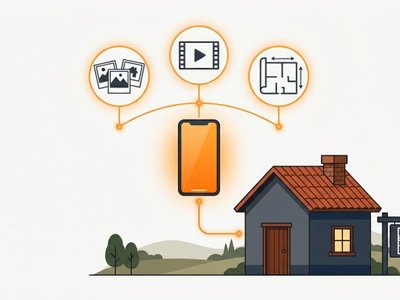
A better filter is a complete file that answers the first round of questions before anyone asks. On domizello, a listing carries the interactive tour and floor plans alongside professional media, so the buyer can inspect the property from anywhere. When an enquiry arrives, the platform pairs it with a partner broker who represents the buyer, not with the owner’s personal number.
Where foreign demand actually concentrates
The foreign buyer map is not uniform. Punta del Este has 93 active projects in commercialization, most launched in the past four years. Sancho Pardo Santayana of Planorbe told El País that the entry of the Brazilian middle buyer is the most important current phenomenon, with Brazilians purchasing apartments between USD 250,000 and USD 600,000.
Montevideo is a different story. Aníbal Durán of Appcu says foreign investment does not move the needle in apartment purchases there. Demand in the capital is mostly Uruguayan, although Argentines are active in the Vivienda Promovida segment.
That is the market tension an owner should internalize. If your property sits in Punta del Este or near the coast, foreign demand is real and measurable. If it sits in central Montevideo, pricing a listing around international buyers may be the wrong assumption.
Canelones, especially near Montevideo, has become an intermediate zone for Argentine buyers. Fabián Kopel of Kopel Sánchez points to investors from places like the Czech Republic choosing Uruguay for its legal reputation, a reminder that the buyer pool is specific and often runs on references rather than random search traffic.
The common thread across these geographies is changing. Foreign buyers are increasingly rent-driven, asking for units that are already rented so they can generate income from day one. That detail matters to a seller: the buyers who are serious usually behave like investors, not tourists.
In the upper brackets, the process gets heavier. A real estate investment above roughly USD 390,000 combined with 60 days of physical presence can open the door to Uruguayan tax residence, and above about USD 1.68 million the presence requirement disappears. Buyers at that level generally arrive already advised, already represented, and already filtered.
Keeping the owner’s phone out of the first conversation
If foreign demand is concentrated but document-heavy, the smart process for an owner is to keep direct contact late in the game. A buyer who has already walked through a digital preview and whose broker has verified ability to proceed is a different counterpart than a name on a WhatsApp message.
That changes the owner’s role. Instead of explaining floor areas and legal routes to every enquiry, the owner waits for a qualified conversation with a professional who represents the buyer. The owner still decides, still negotiates, and still sells. The early noise simply disappears.
This is not about excluding agents. It is about recognizing that foreign buyers bring their own professionals anyway. The owner gains leverage when the first contact is structured, documented, and current.
For sellers in Uruguay’s coastal markets, listing a property with a complete virtual file and speaking through an agent before releasing personal details is no longer a concession. It is how a serious international sale starts without strangers.
Sources
- El País Uruguay: Market operators on Argentine buyer share and Brazilian middle-segment entry.
Frequently Asked Questions
What percentage of foreign investment in Uruguay real estate comes from Argentine buyers?
Argentine buyers represent roughly 65 to 70 percent of foreign investment in the Uruguayan real estate market, with that share rising to about 75 percent in Punta del Este during the summer months.
How long does a typical non-resident purchase take in Uruguay?
A typical non-resident purchase in Uruguay takes 60 to 120 days from first contact to inscribed title, due to tax compliance, fund transfers, and legal procedures.
Where is foreign demand concentrated in Uruguay?
Foreign demand is concentrated in Punta del Este and coastal areas, with growing interest from Brazilian middle buyers in the USD 250,000 to USD 600,000 range. Montevideo's apartment market is driven mainly by Uruguayan buyers, though Argentines are active in the Vivienda Promovida segment.
What are the buyer costs for a foreigner purchasing property in Uruguay?
Buyer costs for a foreigner purchasing property in Uruguay typically run around 7 to 9 percent of the property value, including notary fees, transfer tax, and commission.
How can a seller handle foreign buyer enquiries without being overwhelmed?
A seller can handle foreign buyer enquiries by providing a complete digital file with interactive tours and floor plans, and by using a platform like domizello that pairs enquiries with a partner broker representing the buyer, keeping the owner's personal contact details private until the buyer is qualified.