Key takeaways
- Listings with professional 3D tours can sell up to 31% faster and draw about 60% more online views than photo-only versions.
- In Uruguay's market without a central MLS, a complete virtual tour acts as evidence against duplicate listings and stale prices that erode seller confidence.
- Buyers who take a virtual tour are 4.3 times more likely to book an in-person visit, reducing wasted showings by around 40%.
Contents
A measurable listing weapon, not a tech gimmick
A listing with a professional 3D tour can sell up to 31% faster than a photo-only version and pull in about 60% more online views. Those two figures change what a broker can promise in a listing meeting. In Uruguay, where properties often live on scattered portals and the same apartment can appear under different prices, that kind of visual proof is becoming the first real differentiator.
The old listing pitch leaned on reach, relationships, and a sign on the balcony. The new one starts with a simpler promise: let a buyer walk the property online before they decide to cross the city. That one change filters out casual browsers and leaves more serious visits.
The numbers behind faster sales and serious buyers
The headline figure is already in play: up to 31% faster sale. For a listing that would normally sit 45 days, that works out to roughly 14 fewer days on market. In a slow season, two weeks less exposure can mean the difference between selling at the owner's number and starting to discount.
Online behavior points the same way. Listings with 3D tours have drawn about 60% more views than photo-only listings in broader comparisons. Zillow's more specific 3D Home product found a smaller effect, 14% faster sales and 37% more views; brokers should keep those two benchmarks separate rather than mixing them into one inflated claim.
The effect on closing price can be just as direct, reaching up to 9% in certain property segments. That figure gets repeated in listing presentations for a reason, but it depends on property type, price band, and how complete the virtual tour actually is.
Then there is the behavioral shift. Buyers who take a virtual tour are 4.3 times more likely to book an in-person visit. Around 40% of luxury buyers have made an offer without physically visiting when a full tour was available. Those are not technology statistics; they are pipeline statistics.
For a broker pitching a seller, the most useful numbers are the ones that separate serious demand from window shopping.
- Wasted showings drop by around 40% when a real virtual tour is available.
- Agent time can be recovered: an agent doing 60 showings at 1.5 hours each can save about 36 hours a year.
- Buyer loyalty shifts too: a strong majority, around 77%, say they would switch agents to access a 3D tour.
Uruguay's fragmented portals make visual proof matter more
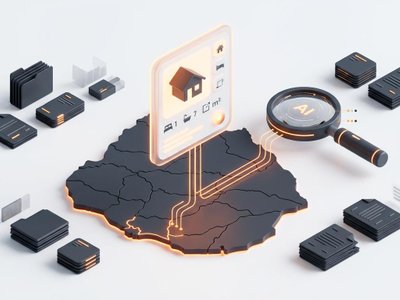
Uruguay's market has no central MLS. That, which sounds like a technical detail, is the root of half a dozen headaches for any broker: duplicate listings, stale prices, and photos that do not match reality. A buyer searching Carrasco or Punta Carretas often sees the same property three times under different conditions.
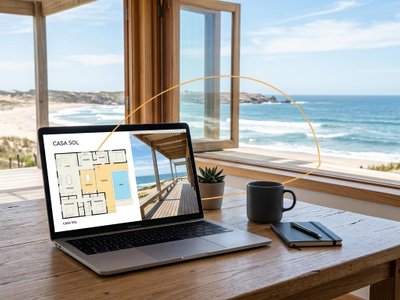
In that environment, a complete virtual tour is not a gadget. It is evidence. A broker who arrives with an interactive 3D tour, current floor plans, and a fly-through video can show a seller something most competing pitches cannot: the listing already looks more real than the duplicates around it.
Some platforms have started to solve both problems together. Domizello, for example, keeps one active listing under one broker and pairs that with a full virtual product on every record. That combination matters because it attacks the two things that most erode a seller's confidence: duplicate exposure and thin visual proof.
The honest counterpoint is that most of these studies come from high-volume US markets. Uruguay will not automatically see the same percentage gains. What transfers is the direction of the effect, not the exact magnitude. A broker who promises US-style speed in a thinner market loses credibility; one who uses the visual product to pre-qualify buyers gains it.
The first showing now happens before the buyer moves
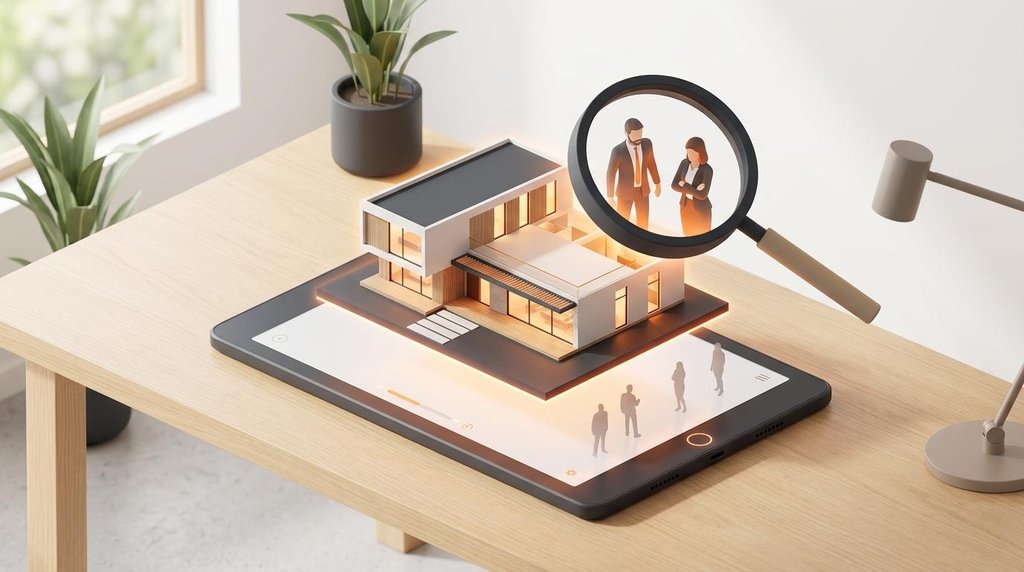
The listing meeting in Uruguay has long been won by personal trust. It still is. But trust now has a visible artifact: a buyer who has already walked the property online and still wants to come, or a foreign buyer who can decide from abroad without a long-haul flight.
That shift changes the broker's role. The first showing is no longer the moment of discovery; it is the moment of confirmation. A seller who understands that logic is more willing to keep the property presentable, choose a serious price, and commit to one broker rather than spreading the listing everywhere.
Domizello understands that shift because it treats the online listing as the first real showing, not as an ad. Brokers who want to bring that kind of presentation to their sellers can look at the broker program as a practical next step.
Frequently Asked Questions
How much faster do listings with 3D tours sell compared to photo-only listings?
Listings with professional 3D tours can sell up to 31% faster, which for a typical 45-day listing means about 14 fewer days on market.
What impact do 3D tours have on online views and buyer engagement?
Listings with 3D tours draw about 60% more views than photo-only versions. Buyers who take a virtual tour are 4.3 times more likely to book an in-person visit, and around 40% of luxury buyers have made an offer without physically visiting.
Why are 3D tours especially important in Uruguay's real estate market?
Uruguay has no central MLS, leading to duplicate listings and stale prices. A complete 3D tour acts as visual proof that differentiates a listing, especially when paired with one active listing per broker like Domizello does.
How do 3D tours reduce wasted showings and save agent time?
Wasted showings drop by around 40% when a real virtual tour is available. An agent doing 60 showings at 1.5 hours each can save about 36 hours a year by pre-qualifying buyers online.
Can I promise the same percentage gains in Uruguay as in US markets?
No. Most studies come from high-volume US markets; Uruguay may see smaller gains. The direction of the effect transfers, but brokers should avoid promising US-style speed and instead use virtual tours to pre-qualify buyers.