Key takeaways
Uruguay lacks a central property database, so direct links and social shares are the primary distribution channels for listings.
WhatsApp and Instagram compress media, but a mini site preserves high-resolution photos, video, and floor plans behind a single stable link.
QR codes on signs and posts can route buyers to the complete listing, turning casual interest into agent conversations.
Contents
A listing link that moves with the property
Most Uruguayan sellers do not wait for a portal to do the work. A property starts circulating in WhatsApp groups, Instagram stories and Facebook posts long before a formal visit happens.
That is where a listing either holds its shape or falls apart. Photos get recompressed. A video arrives as a grainy file. The floor plan is sent as a screenshot with the bottom cut off.
A seller in Uruguay often becomes the accidental distributor of their own listing. The person asking for photos is already interested, and the first response decides whether that interest survives the next minute.
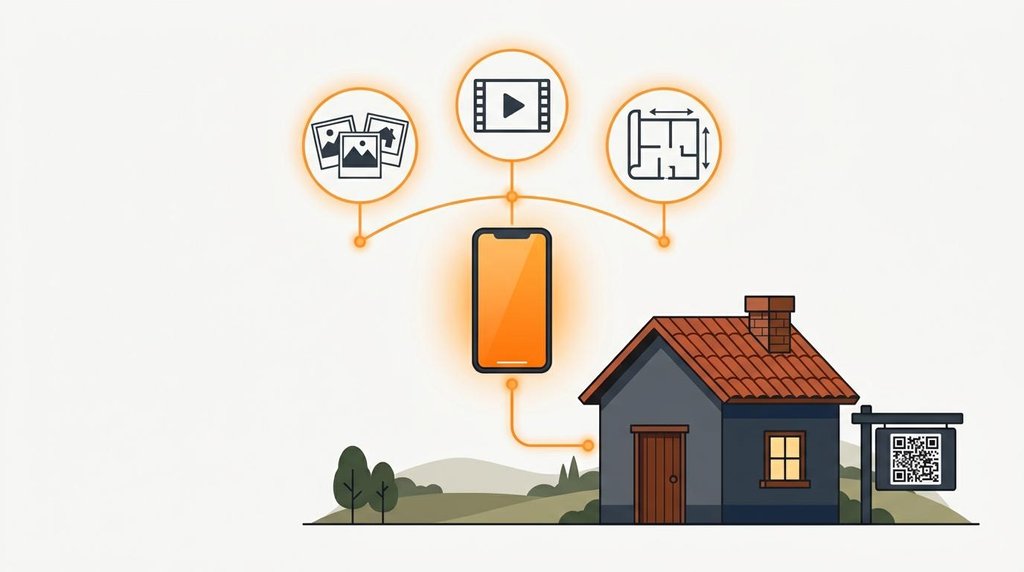
A shareable mini site changes the order of things. One address carries the high-resolution photos, the video and the plans, so what a buyer sees on social media is the same material an agent would show in a meeting. The QR code on a printed sign or a social post becomes the front door to the same page.
One address, two layers of sharing
Think of the listing as having two parts. The first part is made to travel: professional photos, a fly-through video and the 2D floor plan. They are light enough to send, and they do most of the convincing in a social feed.
The second part stays anchored. The interactive 3D tour and the 3D floor plan are not files to forward; they live on domizello and are viewed there. They are the reason a buyer who likes the video goes one step further.
Shareable media: high-resolution photos, fly-through video and the 2D floor plan.
Anchored media: the interactive 3D tour and the 3D floor plan, opened on domizello only.
This split matters because WhatsApp and Instagram are not neutral carriers. They compress video, downscale images and strip context. A single link keeps the full version intact while the owner shares only the address.
The owner does not need to understand file compression or hosting. The mini site gives one clean address, and that address delivers the same page whether it is opened from a phone, a tablet or a desktop browser.
A QR code works the same way. Put it on a property sign, a printed card or a social media post, and the person who scans it lands on the mini site rather than a half-loaded photo album.
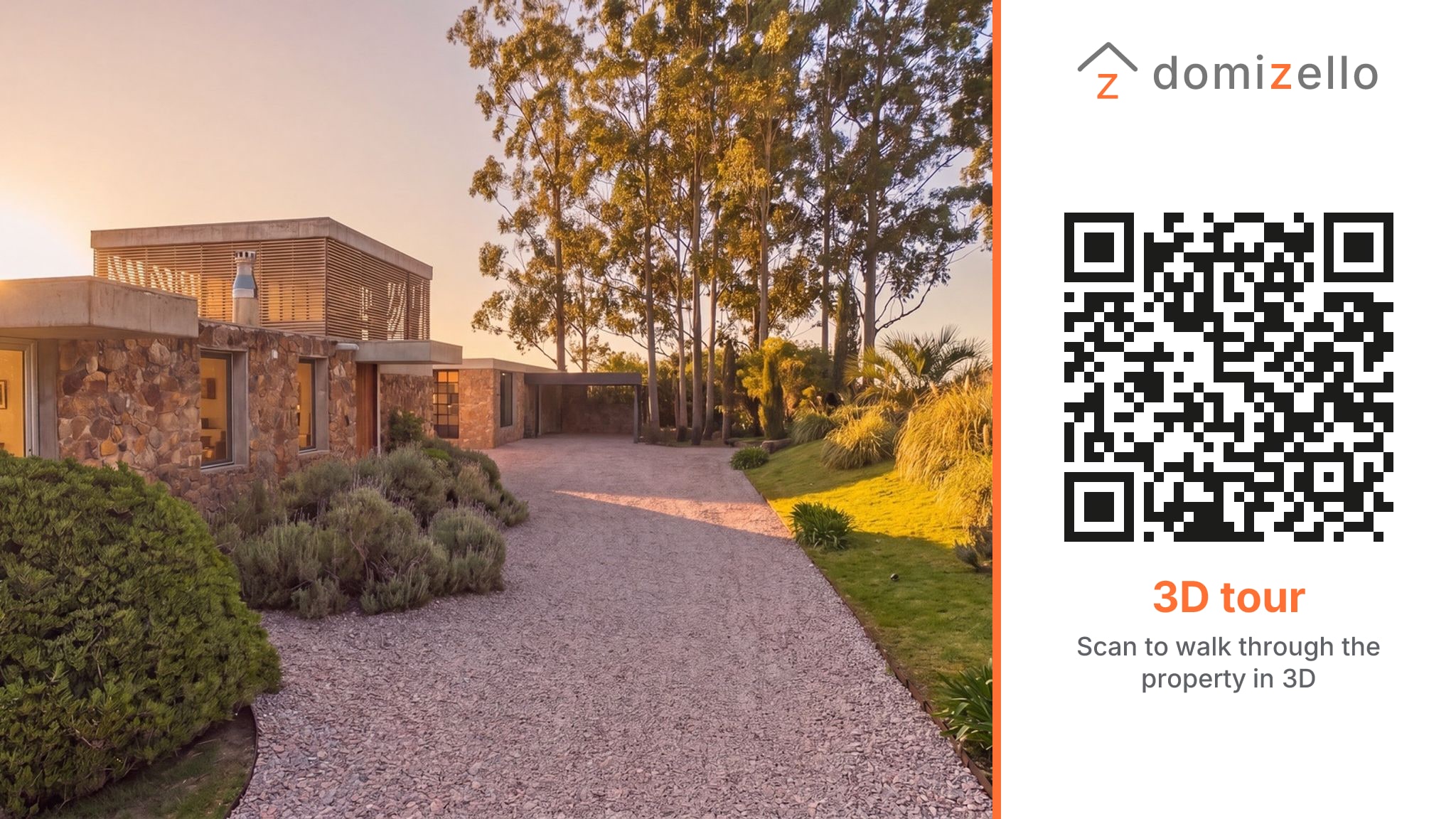
That consistency is what turns a casual ask into a real conversation with an agent.
Why Uruguay still leans on links over portals
Uruguay has no central property database of the kind every licensed agent in the United States must feed. That detail, which sounds technical, explains why sellers and agents rely so heavily on direct links and social shares.
Without one authoritative page for a property, the version a buyer sees depends on where they click. A portal listing may show outdated photos; a forwarded link may carry yesterday's price. A mini site gives each property a stable, current page that travels without changing.
There is a counterpoint worth naming. Social media tools now promise faster listing content, with templates that auto-fill property photos and agent details. Speed helps, but speed alone does not build trust. In a market where many buyers are looking at properties in Maldonado and Montevideo from abroad, the coherence of the file matters more than the number of posts.
Listing videos and property tours have become standard in real estate marketing. The tools to make them keep getting simpler: mobile editing, branded templates, voice-over and music. But the asset only works if it travels through a stable link. A polished video sent through a low-resolution channel still arrives looking weak.
A sharp video sent from a phone can create interest, but if the page behind the link does not match the video, the interest dies there. Owners who understand this treat the mini site as the base and social posts as the invitations to it.
The same logic applies to a QR code. It is not a gadget; it is a short path to the one version of the property that is complete. If the code leads to a messy folder, the owner has simply automated a bad first impression.
Making the first click count when it is shared
The shareable listing is becoming part of how a property is judged before the first physical visit. Buyers in Uruguay increasingly expect the same clarity they get when shopping for anything else online: good images, a clear layout, a current price and one link that works.
For an owner preparing to sell, the practical choice is not to become a media producer. It is to ask how the property will hold up when it leaves the folder. Which video travels? Which plan is visible? What happens when someone scans the QR code?
Those questions lead to a conversation with an agent. The next step is to list the property with the material that travels well: clear video, accurate photos, a current floor plan. If the first click is solid, the visits that follow start from a stronger position.
Frequently Asked Questions
What is a shareable mini site for a property listing in Uruguay?
A shareable mini site is a single, stable web page for a property that contains high-resolution photos, video, floor plans, and often an interactive 3D tour. It is designed to be shared via a link or QR code, ensuring that the property is presented consistently across WhatsApp, social media, and other channels without compression or loss of quality.
Why do sellers in Uruguay rely on direct links instead of property portals?
Uruguay lacks a central property database like the MLS in the United States, so there is no single authoritative source for a listing. As a result, sellers and agents share direct links to mini sites to maintain control over the property's presentation, ensuring that buyers always see current photos, accurate prices, and complete information.
How does a QR code help with property marketing in Uruguay?
A QR code provides a quick, scannable path to the property's mini site. When placed on a sign, printed card, or social media post, it directs potential buyers to the full, high-quality listing rather than a compressed photo album or outdated portal page, creating a consistent first impression.
What is the difference between shareable media and anchored media in a listing?
Shareable media includes high-resolution photos, fly-through videos, and 2D floor plans that are lightweight and can be easily forwarded through messaging apps. Anchored media, such as interactive 3D tours and 3D floor plans, remains hosted on the mini site and is viewed there, providing a deeper experience for interested buyers.
Why is a stable link important for property videos and tours?
Social media and messaging apps often compress videos and images, reducing their quality. A stable link to a mini site ensures that the video or tour is viewed in its original quality, maintaining the professional presentation and preventing the loss of buyer interest due to poor media quality.