Key takeaways
- Shared portal leads close at 0.4%–1.2% for most agents, while referrals and repeat clients convert at 14%–30%.
- Uruguay's lack of a central MLS makes a shared pool of vetted brokers with pre-qualified 3D-tour buyers the real filter for demand.
- Average cost per lead in the US hit USD 503 in 2026; responding within five minutes makes qualification 21 times more likely than waiting 30.
Contents
When a Buyer Previews a Home, the Lead Stops Being Cold
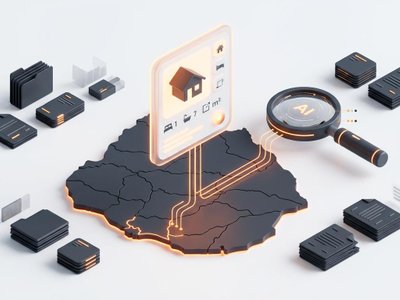
Uruguay's purchase market runs without a central MLS. Listings sit with individual brokers, duplicate portals, stale prices. That fragmentation is well known. The cost that gets less attention is what it does to lead quality.
A buyer who clicks a portal ad is not the same as a buyer who has walked a property in 3D, checked the floor plan, and still asks to visit. The second buyer has already filtered themselves. In a market with no central record, that distinction is worth more than volume.
International brokerage data puts numbers on the gap. Shared portal leads close at 0.4%–1.2% for most agents. Referrals and repeat clients convert at 14%–30%. Top performers on paid leads can reach 3%–5%, but only by qualifying early.
The lead pool that matters, especially in Montevideo, Punta del Este, and Canelones, is not the biggest one. It is the one where a buyer arrives already informed.
What Separates a Cold Lead from a Curated One
The lead market has a spectrum. At one end are contact lists scraped or bought in bulk. They take more work to convert because the person has never seen the property. At the other end are buyers who have spent real time with a listing.
Paid portal leads sit somewhere in between. They are generally closer to a transaction than colder sources because users are actively searching. They are also usually shared, with per-lead costs from USD 20–60 and monthly spend reaching USD 1,000 or more in larger metro areas. HousingWire's February 2026 review of paid lead sources described them as closer to a transaction, but not automatically easier to close.
Platforms that sell single-agent leads charge for the privilege, often a monthly base plus USD 30–50 per lead. That does not automatically make the lead warmer. It only removes competition.
Warmth comes from engagement:
- Referrals and repeat clients: 14%–30% conversion.
- Expired listings: 43%–44% conversion.
- Open-house attendees: physically present buyers are substantially warmer; engaged neighbors can be ten times warmer than a cold-called homeowner.
- Paid portal leads: 0.4%–1.2% for most agents, rising to 3%–5% for top performers.
Speed also defines whether a lead stays warm. Average agent response time sits around 917 minutes, or more than 15 hours. The first agent to respond wins most of the time; responding within five minutes makes qualification 21 times more likely than waiting half an hour.
Spend alone does not fix conversion. In smaller US markets, monthly portal budgets run USD 300–500; in larger metro areas they pass USD 1,000. Yet the conversion curve remains close to the 1.2% ceiling for most agents.
A curated lead is valuable only if it reaches a broker who can move. That is why a shared pool built around pre-qualified virtual-tour buyers works differently from a bulk portal purchase.
Shared Supply Travels Farther Than a Solo Listing
Uruguay does not have a central listing system. It does have a small, relationship-heavy broker market. That combination should make a curated shared pool more powerful, not less.
The uncomfortable part of the lead-buying data is that unshared leads still underperform when the underlying contact is cold. A single-agent seller lead from a home-valuation campaign can sit 18 months from listing and close at 1%–3%. Volume hides that lag.
Meanwhile, average cost per lead in the United States reached USD 503 in 2026, up 12.3% from the previous year. Most brokers cannot fix rising prices by buying more leads. They can only filter better before the first call.
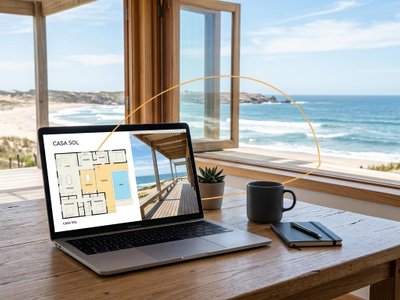
That is where a shared network of vetted brokers changes the economics. A buyer who has moved through an interactive 3D tour, reviewed floor plans, and checked sun orientation is not a cold lead. The property itself has done the first qualification.
The alternative is not to abandon buyer demand. It is to separate the signal from the noise earlier. A virtual tour filters out casual browsers. A floor plan filters out layout mismatches. Sun orientation filters out the buyer who would never live there. By the time a broker receives the lead, the buyer has done the homework.
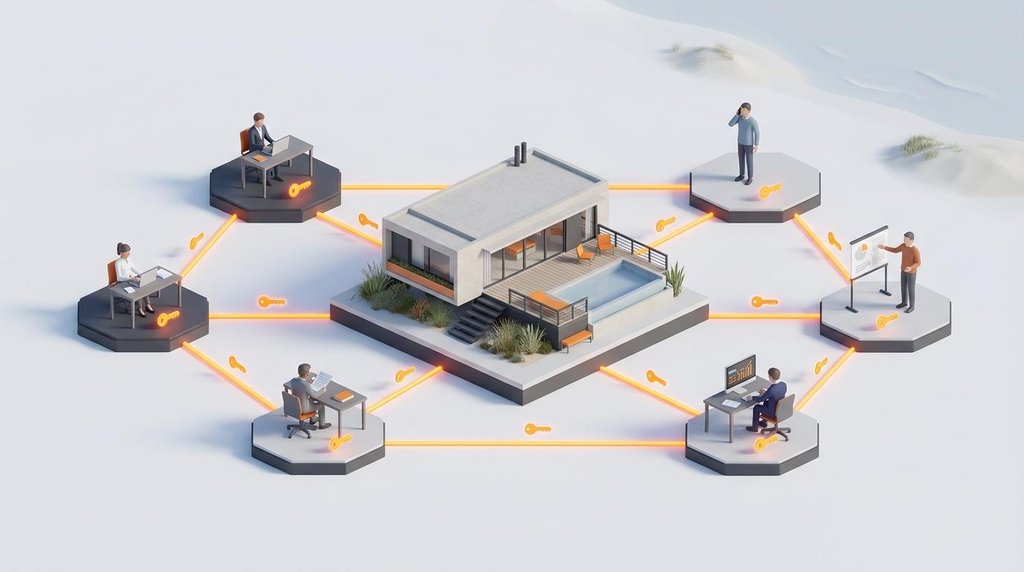
In a structure where an active property appears once, under one broker, the broker who actually curates is the one who wins. The lead follows the listing, not the loudest portal ad. When another broker in the pool receives that buyer, the favor circulates through the network rather than between two specific colleagues.
That is the closest thing Uruguay has to a shared listing standard without a central MLS, and it works only if the supply side stays curated.
The Brokers Who Share the Right Leads Will Shape the Market
Uruguay skipped the centralized MLS era and moved straight toward curated digital inventory. The brokers who thrive will be the ones who treat pre-qualified buyer demand as a network asset, not a private spreadsheet.
A buyer who previews a property and still raises a hand has already signaled intent. The network that respects that signal, routes it to the right broker, and protects the broker-client relationship will compound faster than any solo lead purchase.
Domizello has built for that structure, where curating brokers gain network reach without losing their client. Brokers who want to see how that works can explore the platform's program for agents.
Lead quality is no longer about who shouts loudest. It is about who curates the property well enough that a stranger becomes a buyer before the first showing.
Frequently Asked Questions
What makes a lead warm or curated in Uruguay real estate?
A curated lead is a buyer who has already engaged with the property, such as through an interactive 3D tour, floor plan review, or sun orientation check. These buyers have filtered themselves before contacting a broker, which makes them closer to a transaction than a raw portal click or bulk-purchased contact.
Why do paid real estate portal leads convert so low?
Shared portal leads close at 0.4% to 1.2% for most agents, while referrals and repeat clients convert at 14% to 30%. Paid leads are actively searching, but they are not automatically warmer. Only top performers who qualify early reach 3% to 5% conversion.
How quickly should brokers respond to a real estate lead in Uruguay?
Speed matters. The average agent response time is around 917 minutes, or more than 15 hours. Responding within five minutes makes lead qualification 21 times more likely than waiting 30 minutes, so a fast, structured follow-up is critical.
Can a shared broker network work without a central MLS in Uruguay?
Yes. Uruguay lacks a central MLS, but a curated shared pool of vetted brokers can route pre-qualified virtual-tour buyers effectively. The property listing does the first qualification, and the lead follows the listing rather than the loudest portal ad, circulating through the network.
What is the average cost per lead in real estate and does spending more fix conversion?
The average cost per lead in the United States reached USD 503 in 2026, up 12.3% year over year. However, higher spend alone does not fix conversion; most agents stay close to the 1.2% ceiling for paid portal leads. Better filtering and curation before the first call are more effective.