Key takeaways
With no central MLS in Uruguay, a broker's update is often the only evidence of activity – silence reads as inactivity and triggers seller distrust.
70% of recent US buyers called the transaction a hassle; 46% blamed uncoordinated providers, not direct communication, showing coordination gaps underlie seller frustration.
39% of buyers prefer a people-led, tech-supported experience over app-driven processes – agents who send video, screenshots, and async updates will retain more Uruguay listings.
Contents
Sellers do not fire agents over market conditions
Sellers rarely fire their agent over a slow market. They fire them over the silence that follows the listing. The owner watches the portal views, hears nothing for two weeks, and starts to believe the property is not being shown. The broker, meanwhile, may have shown it four times and simply failed to say so.
This is the cheapest loyalty problem in residential real estate. It does not require a better closing ratio or a larger advertising budget. It requires a consistent update loop.
In Uruguay the cost of silence is even higher. The country has no central MLS, so a seller cannot independently verify whether an agent is working. The broker's update is often the only evidence. When that evidence disappears, trust follows.
The pattern repeats in every price segment. A seller in Pocitos and a seller in Maldonado both judge the agent less by the number of inquiries and more by the quality of the story the broker tells about those inquiries. Silence is not neutral; it reads as inactivity.
The coordination gap behind the silence
The strongest available evidence comes from the buyer side, but it explains seller frustration indirectly. A HomeServices of America survey of 1,000 recent U.S. homebuyers, reported by HousingWire, found that 70% described the transaction as a hassle. The largest single reason was not the mortgage or the inspection. It was uncoordinated service providers: agents, lenders, insurers, and title companies moving at different speeds. 46% of buyers pointed to that.
Only 8% named communicating with their agent as the biggest hassle. That figure seems to contradict the idea that silence is the core problem. It does not. Communication failures usually show up as broken coordination: a listing that goes quiet, a closing date that slips without explanation, an inspection result that arrives late. Sellers feel the same pattern from the other side of the table.
Nearly seven in ten buyers entered the purchase expecting the agent to coordinate mortgage, title, and insurance providers. When that coordination fails, the agent absorbs the blame even if the lender was the one who dropped the ball. Sellers have a parallel expectation. The listing agent is the single point of contact for everything that happens after the property goes live.
Even provider recommendations shape the experience. 76% of buyers said their agent recommended a mortgage, title, or insurance provider, and 95% of those who received a recommendation found it helpful. That is a coordination signal. The agent who recommends well is the agent who communicates well. Sellers infer similar competence from the vendors, inspectors, and photographers the agent brings in.
The same consumer research offers a useful warning on style. 39% of buyers preferred a people-led but tech-supported experience, while only 26% wanted an app-driven process with little human interaction. Technology should make communication easier, not replace it. A seller does not want a dashboard alone; they want the broker to translate the dashboard into a decision.
No agreed update rhythm. The broker never asks whether the seller wants a weekly call or a WhatsApp summary after each showing.
Vague activity reports. 'There is interest' without names, viewers, objections, or next steps.
Always reactive. The seller only hears from the broker after asking what is happening.
The cheap fix is flexibility. A seller should state a preferred communication frequency and channel, and the agent should adapt rather than forcing the seller into the agent's style. This is not a technology problem. It is a discipline problem.
Why Uruguay makes communication non-negotiable
Uruguay's listing culture intensifies this. Without a central MLS, the same property often appears under different brokers with different prices and different photos. The seller cannot tell which version of the listing a buyer actually saw. When a broker does not communicate, the owner assumes the agent is part of that chaos, not a solution to it.
This is why the version of real estate that wins here is not louder marketing. It is legible process. A broker who curates one active listing, keeps it current, and attaches a complete virtual product on every property removes the ambiguity that fuels seller anxiety. That is the closest thing Uruguay has to the MLS experience without an MLS.
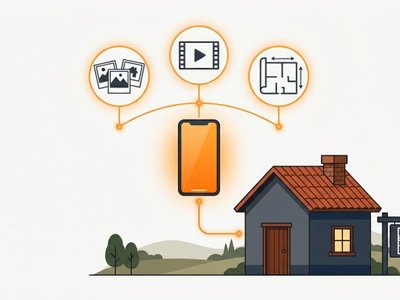
Visual product also closes the communication gap. Homeowners are more likely to list with an agent who uses video, and listings with professional photos tend to sell faster. In a market where buyers preview from Buenos Aires, São Paulo, or Madrid before booking a flight, that material is not decoration. It is the proof of activity a seller can actually see.
Uruguay's seller base is also peculiar. An owner may be in Montevideo while the buyer is in Argentina, or in Europe while the property is in Punta del Este. Updates therefore need to work asynchronously: a recorded walkthrough, a short voice note, a screenshot of the portal analytics. The broker who insists on a phone call at 3 p.m. local time will lose the relationship to someone who sends a visual update at 9 a.m. and lets the seller reply.
The uncomfortable market tension is that the data most often cited for communication complaints does not measure seller switching at all. It measures buyer friction from uncoordinated providers. Brokers should not defend themselves with a statistic. The real argument is behavioral. A seller who receives updates after every showing, with feedback and a next step, rarely asks whether the agent is working. A seller who receives nothing will eventually ask for the listing agreement back.
The agents who survive the next cycle
The next seller cycle in Uruguay will not be won by the agent with the most listings. It will be won by the agent who makes the listing process legible to the owner. That means shorter feedback loops: a message after each showing, a clear read on buyer objections, a concrete next step after every contact.
The cheapest retention tool a broker has is still the update. Video, virtual tours, and shareable digital material make that update more credible. A seller who can see the exact property experience a buyer had understands why the feedback matters.
Domizello understands this dynamic. Its broker program is built for agents who treat updates as part of the listing product, not an afterthought. Brokers who want to work that way can explore the agent program.
Frequently Asked Questions
Why do sellers fire their real estate agent?
Sellers rarely fire an agent over market conditions. They fire them over silence after the listing. In Uruguay, with no central MLS, the broker's update is often the only evidence the property is being actively marketed, so consistent communication is critical for retention.
How often should a real estate agent update a seller in Uruguay?
The agent and seller should agree on an update rhythm upfront, such as a weekly call or a WhatsApp summary after each showing. Updates should include buyer feedback, objections, and a clear next step, and can be sent asynchronously to accommodate remote owners.
Why is communication non-negotiable for agents in Uruguay?
Uruguay has no central MLS, so the same property often appears under different brokers with different prices and photos. A seller cannot independently verify activity, so consistent, legible updates remove ambiguity and prove the agent is working.
What does buyer-side research reveal about real estate communication failures?
A HomeServices of America survey found 70% of buyers described the transaction as a hassle, with 46% blaming uncoordinated service providers. Communication failures typically show up as broken coordination, such as a listing going quiet or a closing date slipping without explanation.
What should sellers look for in a listing agent in Uruguay?
Sellers should look for an agent who sets a clear update rhythm, provides concrete feedback after showings, uses video and professional photos, and adapts to the seller's preferred communication channel. These agents make the listing process legible and build trust.